











On The Line at People’s History Museum
Johnny James, Managing EditorVisit now
On The Line
Always double check opening hours with the venue before making a special visit.
There are moments when the ordinary agreements that hold society together stop working. Conditions become intolerable, labour is withdrawn, daily systems grind to a halt – and the fault lines of power become visible.
One of these moments came in May 1926. In the centenary year of the General Strike, On The Line at People’s History Museum returns to the nine days when three million workers, called out by the Trade Union Congress, walked out in support of more than a million miners locked out of work for refusing to accept lower pay and longer hours. Although the strike ended without guarantees – and the miners fought on for months – its impact was seismic. It reshaped how power and labour were understood in Britain, setting in motion a century in which solidarity would be repeatedly tested and re-formed.
From 1926 onwards, the exhibition traces how strike action has shaped working lives, communities and political consciousness. Drawing on the museum’s nationally significant collections, it brings together banners, posters, artworks, photography and everyday ephemera – not just as historical evidence, but as the materials of collective action: the things made, carried, worn and held up when people decide that striking is the only option left.
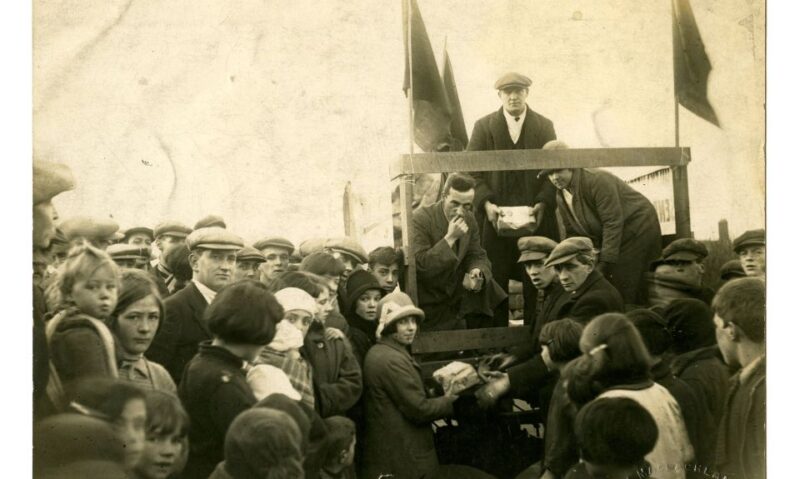
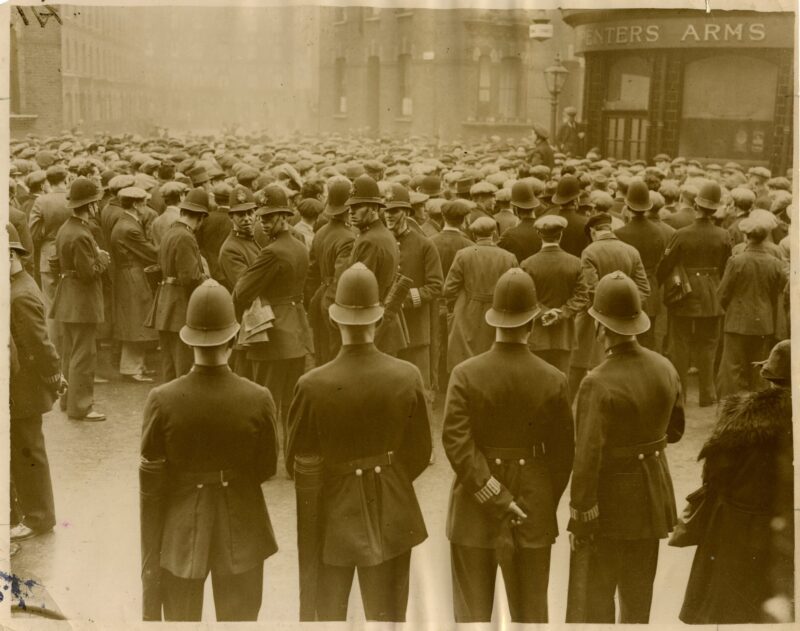
Photography forms one of the exhibition’s strongest threads. Images from 1926 capture the tense atmosphere as the General Strike unfolded, while amateur photographer Joe Short’s reportage shows both resilience and hardship – miners’ children swimming in the heat, soup kitchens in colliery villages. Across the decades, the camera records various moments of collective action, including one of the most significant mobilisations in modern labour history: the Grunwick Strike for union recognition (1976-1978).
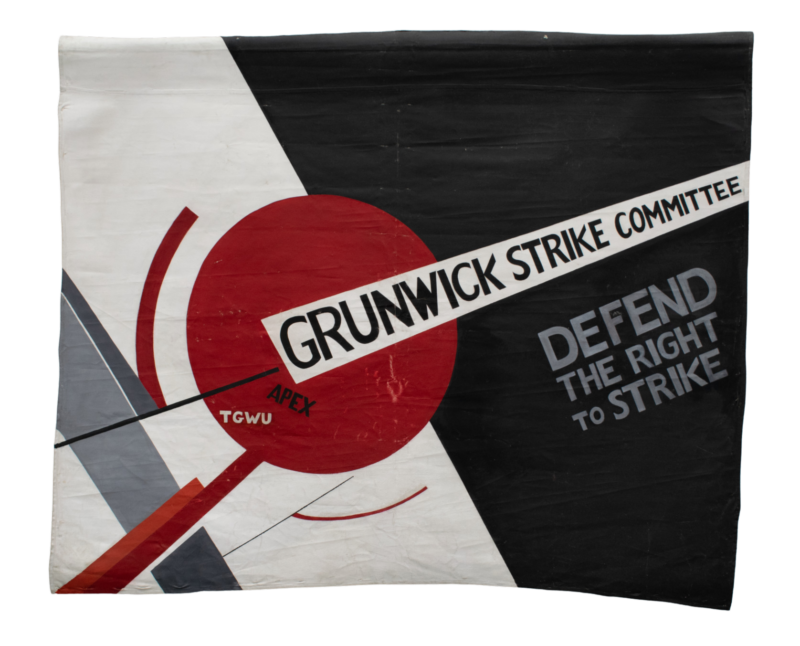
Marking its 50th anniversary during the exhibition’s run, the Grunwick Strike centres on Jayaben Desai, who moved from India to Tanzania before settling in Britain amid a political climate growing more hostile, crystallised in Enoch Powell’s ‘Rivers of Blood’ speech and the rise of the National Front. Working among a largely migrant Asian female workforce in a north London film processing factory, Desai rose to prominence as a strike leader and became a powerful voice for dignity and union recognition. Banners raised on the picket line, protest posters, and photographs capture both confrontation and solidarity within a movement that grew far beyond the factory gates.
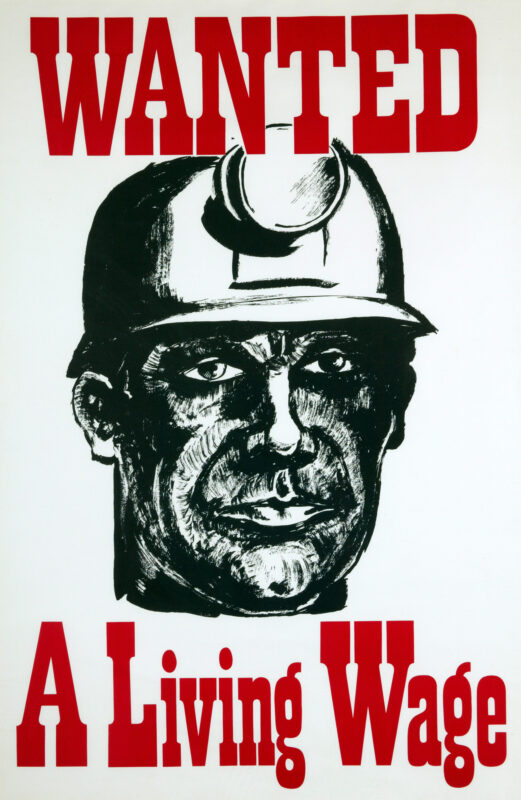
Any account of a century of industrial conflict must include the Miners’ Strike of 1984-85, and On The Line does – but with nuance. Lesbians and Gays Support the Miners forged alliances across political and social boundaries, while Women Against Pit Closures transformed grassroots organising into a national political force. Woven across banners, posters and ceramics, these histories show that unity doesn’t always begin from a shared starting point; sometimes it is built, out of necessity, in the midst of struggle.
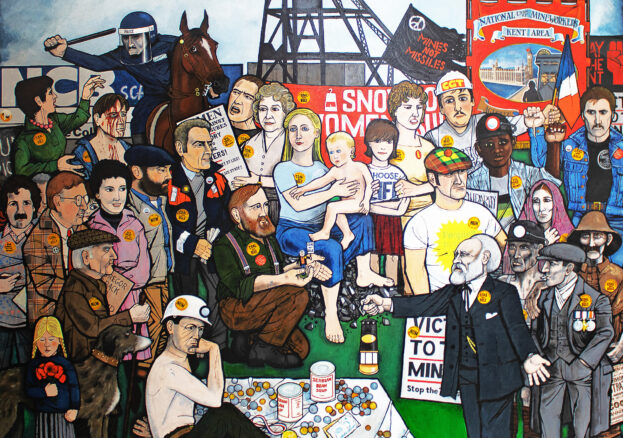
Objects bring that experience of struggle into the gallery. The Union and Victory banner from the Great Dock Strike of 1889 stands alongside two oil paintings shown publicly for the first time: S. Rushton’s Taking Scabs To Work, Barking Hospital, rooted in a dispute following the privatisation of cleaning services, and David Rumsey’s The Past Is Another Country, a graphic work depicting scenes from the 1984-85 Miners’ Strike, including the Battle of Orgreave.
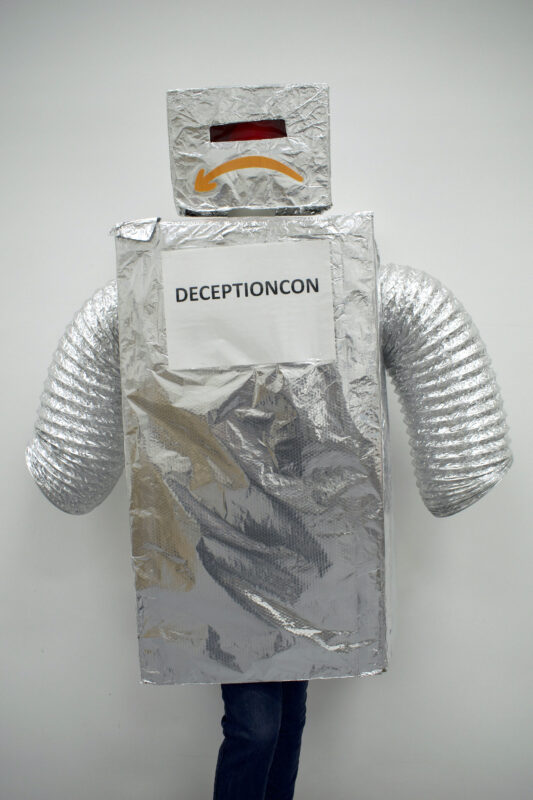
Other objects foreground the physicality of industrial action. A full-scale Ambulance Strike Shelter – used by workers maintaining a picket line – from the 1989-90 pay dispute brings the endurance of sustained action into the space. Alongside it sits a recent acquisition: the Deceptioncon robot costume (2023-24), created by employees campaigning to unionise at Amazon’s Coventry warehouse, embodying workers’ sense of being treated as machines.
From 1926 to the present day, On The Line traces how one act of resistance informs the next. The disputes differ in scale and outcome, but each gathers force from the last as labour is withdrawn, communities organise, pressure builds – and a line is drawn. This exhibition gathers those moments and holds them in view as part of a story still unfolding.