















Jacob Cartwright and Nick Jordan in conversation with Dave Griffiths

Participants
DG = Dave Griffiths, Interviewer
JC = Jacob Cartwright, Interviewee
NJ = Nick Jordan, Interviewee
N = Narration of John James Audubon account


Recording starts

DG: We’re here at the Cornerhouse to talk to Nick Jordan and Jacob Cartwright about their new exhibition Cairo: breaking up of the ice. Tell me a bit more about Cairo; where is this place and why did you base the film there?

JC: Cairo is a small town at the confluence of two of America’s biggest rivers, the Mississippi and the Ohio, and it’s a place that’s had a very troubled history.

NJ: It’s the place where John James Audubon, the nineteenth century ornithologist, was stranded, stuck in river ice for several weeks in the winter of 1810.

JC: And we use his words, his account of that for the voice-over for the film.

N: While proceeding up the Mississippi, above its junction with the Ohio, I found to my great mortification that its navigation was obstructed by ice.

DG: You’ve recreated the journey of Audubon, who’s an ornithologist and an explorer, and in some ways throughout this whole trilogy of films, because Cairo’s part of a trilogy – tell us a bit more about Audubon.

JC: Audubon was a French-American. Essentially, he moved to the States when he was about 19. His father was a French sea captain, so he was a fairly wealthy Frenchman. He was fascinated by birds and he’d had some artistic training and so, over a period of time, he started to draw and study birds and eventually, he took upon himself this grand scheme which was to record and draw each and every species of bird in North America; but his narratives, his stories are particularly representative of that time in America.

DG: I think particularly fascinating was the birdlife and the presence throughout the film of birdlife, and it goes from very almost passive observation in the birds to very nervous rhythms that the birds seem to almost trigger the rhythms of the filmmaking.

JC: Audubon’s tales, he kind of identified himself, to some degree, with birds anyway, I would say.

NJ: It was part of his performance really, of the language that he used.

DG: Apart from the birds, the other powerful presence for me is the rivers.

Both: Yeah.

DG: And this confluence of rivers that seems a very potent location. It reminds me in a way of this kind of presence in American popular culture of the magic surrounding the crossroads, and I’m just wondering if that is significant for you?

JC: The initial excitement you get of the rivers – these kind of enormous waterways, this kind of riverine magic that you have of the Ohio, and then obviously the Mississippi is caught up with mythology.

NJ: And its cultural significance with the deep South and if you look back over Cairo’s history, it is rise and fall. It had periods of prosperity and periods of destitution throughout two hundred years of history.

JC: That Commercial Avenue, as it’s called, was once the main mercantile thoroughfare in Cairo and over a period of a decade or so, gradually many of the businesses and the shops closed down and there was this kind of stand-off between communities.

NJ: There was white-owned businesses who rather than integrate refused to serve black people so they shut up shop and left town.

DG: In the film, you certainly bring that violent disruption that’s occurred in the town and also in the surrounding countryside, particularly represented by the breaking up of the ice in some way.

NJ: Absolutely, yeah.

DG: But I found when watching the film that I was particularly taken by a couple of transitions, of editing transitions that were also violently disruptive in breaking up the surface of the film.

N: The two streams seemed to rush against each other with violence.

NJ: Yeah, we do try and certainly borrow from that language but not to make a deliberate facsimile or quotations, and there is a violent cut, a flash which signals …

JC: It presages, doesn’t it?

NJ: … that we segueway into actually Cairo itself.

JC: I would point out as well that not everything we do in editing is so sophisticated and reverential.

NJ: Not at all.

JC: To some extent, what we do is quite playful and we just try things out. So midway through the film when we were filming white-tailed deer by the Mississippi and it was getting towards dusk and we put some banjo, a treated banjo soundtrack to it. Is it Dock Boggs?

NJ: It’s Dock Boggs, it’s a Kentucky folk ballad.

JC: I think as well with making these films is, having spent time out on that in Cairo freezing our feet off and getting excited by everything, we’re not quite sure necessarily how that footage will read. Will it be overtly familiar kind of American scenery of rivers and woods and wild animals and decaying American buildings? Will that all be very familiar stuff? Or is it just that we’ve got used to it or we’ve been working with it so much?

NJ: It’s all through the editing where you find the unfamiliar or make something which is distinctive, and the film is made in the edit.

DG: And I feel that’s an overriding sense of the show, particularly with the framed…

JC: Yeah, not forgetting the framed pictures.

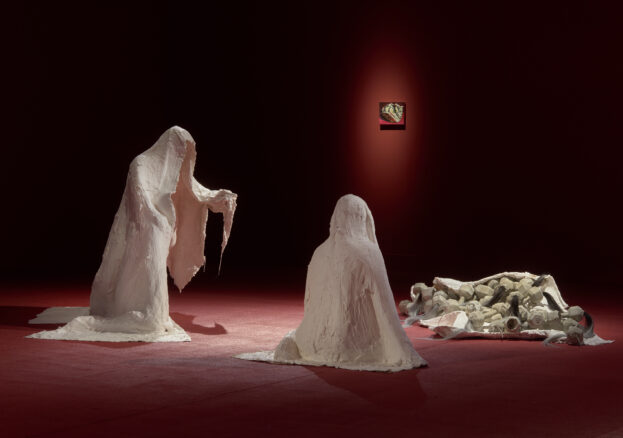
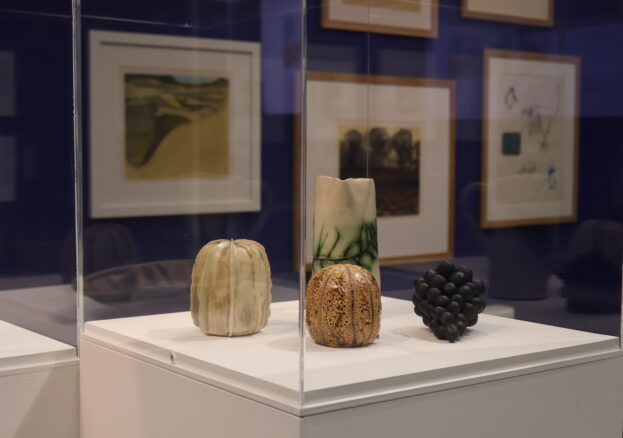
DG: The framed pictures and the artefacts that you’re displaying that have very much a sense of, I feel, an uncanny encounter with an America that we think we understand through popular culture but is still very much hidden.

JC: And we’re going to go back. We’ve made some connections.

NJ: Some of these things we’re talking about, we’re hoping to develop into a documentary that will look into much more detail really on Cairo’s social history, whereas this film is a combination of cultural and natural forces.

N: It was impossible to move her but our pilot ordered every man to bring down great bunches of cane, which were lashed along her sides and before these were destroyed by the ice, she was afloat and riding above it.

JC: Our project hopefully later this year is going to be more of a sort of, I say straight documentary – it’ll probably be an experimental documentary if we’re going to give it a name, but we want to take more time to actually work with Cairo.

NJ: Yeah, now that we’ve concluded all the Audubon…

DG: Well, congratulations with that future project and on this current collaborative show.

Recording ends 8:31

  • Join our club
    Creative Tourist Boutique
  • Your top-to-bottom guide to Manchester
    The Manchester Cultural Calendar 2011
    • Boutique Weekender: February 2012

      Mark the start of spring with this very special, pick n’ mix weekend of art, music, dance and fashion

    • History lesson.
      Visiting Manchester? Want to find out more about what makes Manchester (and Mancunians) tick? Look no further than our potted guide to Manchester past and present. Susie Stubbs and Jonathan Schofield tell all.

    • Curiouser and curiouser.

      Susie Stubbs gets confused and amused at Tate Liverpool’s latest exhibition, Alice in Wonderland

  • Creative Tourist iPhone app
    Creative Tourist iPhone app
  • Manchester hotels
    Book your stay
  • A playful trip around the city
    Manchester Mini Explorer pack
  • Explore Manchester
    The Manchester Weekender 2012
  • Manchester Cultural Calendar
    The Manchester Cultural Calendar 2012
  • Find out more
    Join our mailing list
  • Competitions
    Win stuff now!
  • Goseethis.com
  • Flickr Photostream
    Up, Up, And AwayWhat You Laughing AtWe Love ManchesterAfterHours - BlackLab (03)AfterHours - BlackLab (04)AfterHours - BlackLab (01)