









Michaela Yearwood-Dan: The Practice of Liberation at The Whitworth
Johnny James, Managing EditorVisit now
Michaela Yearwood-Dan
Always double check opening hours with the venue before making a special visit.
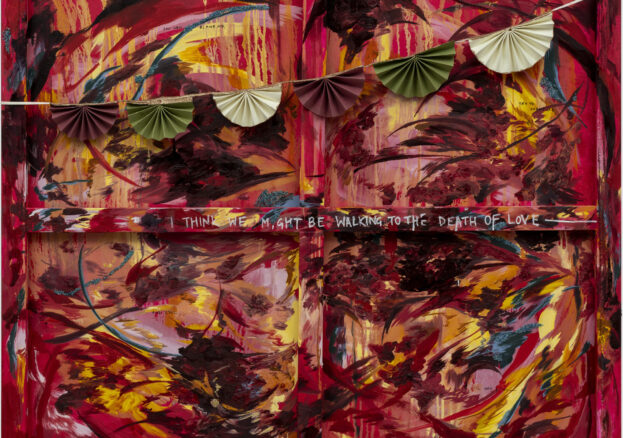
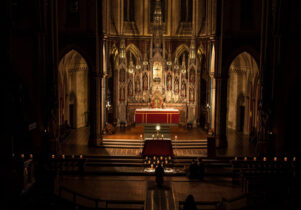
At the Whitworth this spring, Michaela Yearwood-Dan’s The Practice of Liberation takes the visual language of the Catholic church – ritual, symbolism, devotion, suffering – and turns it towards something less fixed and more searching.
For her first UK institutional museum exhibition, the London-based artist uses painting, ceramics and sound to build a multi-dimensional show whose form matches the ambition of its themes: the histories of colonialism and institutional religion combined with more personal explorations of memory, transformation and self-definition.
The exhibition features 14 paintings and six ceramic vessels, all newly commissioned, and arranged in dialogue with a bespoke score by composer Alex Gruz. Image, text and sound intersect across the show, creating a layered experience that accumulates meaning as you move through the gallery.
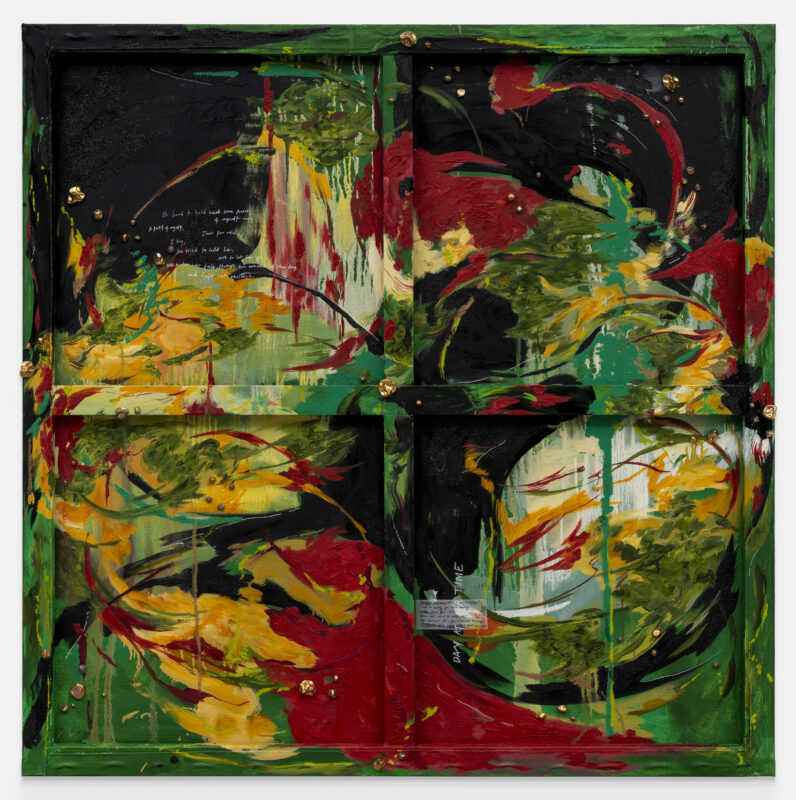
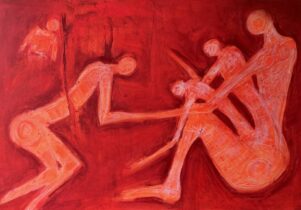
The 14 abstract paintings loosely echo the Stations of the Cross, a sequence traditionally used to mark Christ’s suffering and endurance. Recurring motifs – fallen crosses, diptych formats reminiscent of stained glass – suggest a ritual language being reworked. Forms once used to prescribe belief and behaviour become something more open, articulating both personal and collective liberation.
Alongside them, six ceramic vessels reference Jesus’ first miracle of turning water into wine, while also echoing the woven structures of Ghanaian bolga baskets – bringing a sense of domesticity into the exhibition and expanding its cultural and historical frame.
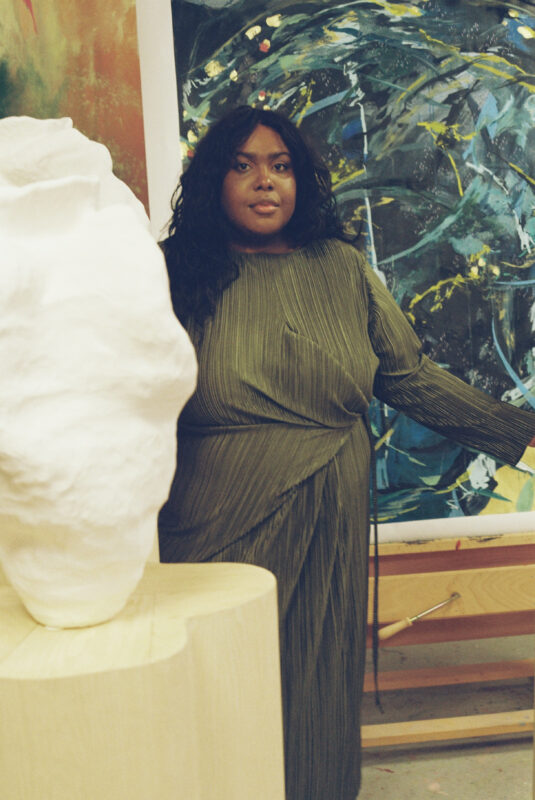
Across the surfaces of Michaela Yearwood-Dan’s work, she inscribes fragments of text, blending diaristic lines about colonialism, patriarchal structures and class systems with borrowed lyrics and references to writers including civil rights activist James Baldwin. These words – sometimes easily legible, sometimes half-obscured – are layered into fields of colour that shift between loose, swirling abstraction and more structured forms. In holding her private diary reflections against much larger histories, the viewer is invited to consider how the personal and the political intersect.
The title references the writings of Gloria Jean Watkins, better known by her pen name bell hooks, whose work explores how education, culture, love and art can become tools for social and personal freedom. Like Watkins, Michaela Yearwood-Dan sees liberation less as a final-form state and more a continual process – one grounded in care, reflection and new ways of communing.
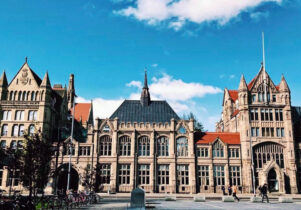
It’s an idea that sits well in the Whitworth, a space long known for bringing histories and cultures into dialogue. For a show concerned with liberation, care and new ways of communing, it feels right that anyone can step in for free.