
















Everything and Nothing at The Portico Library
Johnny James, Managing EditorVisit now
Everything and Nothing
Always double check opening hours with the venue before making a special visit.
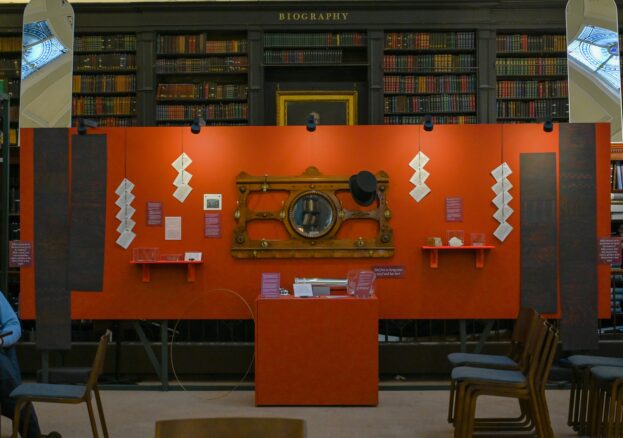
For much of its history, The Portico Library’s dedicated ‘Keeper of Rooms’ lived in the basement and was responsible for ensuring every candle and gaslight in the building burned until 10pm sharp. It’s a tiny detail of the Portico’s history, buried in the archive, but it hints at something larger: the Library as a place sustained by people whose stories don’t always make it into the official record. Everything and Nothing builds from fragments like this, piecing together a human history of this extraordinary 220-year-old institution.
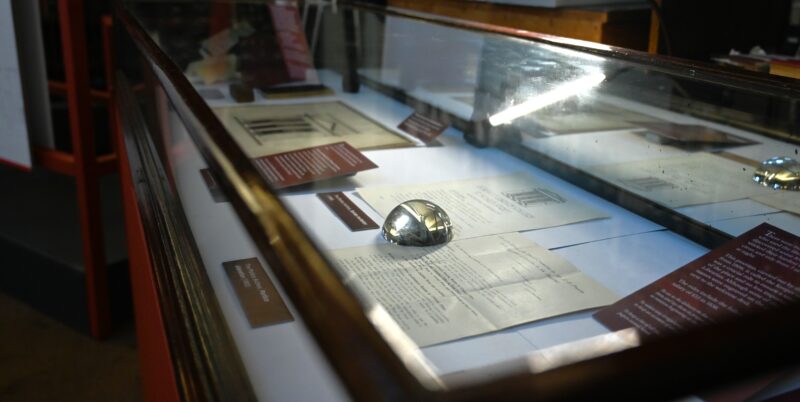
Among these people is Mabel Rogerson, who stepped in as the Portico’s first female librarian during the First World War, covering for her brother while he was away fighting. Despite taking on the role, her name was never added to the brass plaque of former librarians. Here, she is restored into view, alongside several other figures whose contributions have hitherto sat outside the official version of the Portico’s past.
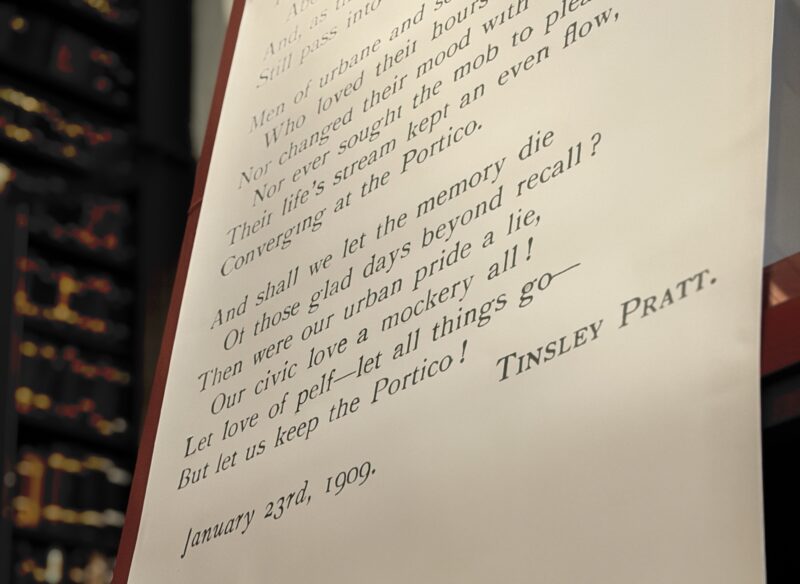
Elsewhere, the exhibition moves through textual traces of everyday life inside the building. There are handwritten committee minutes from the Library’s early decades, ghostly drawings made by members in the margins of books, and a 1909 poem by Librarian Harry Tinsley Pratt. These little moments, gestures and routine tasks accumulate here to answer the exhibition’s titular question: ‘What makes a 220-year old library?’.
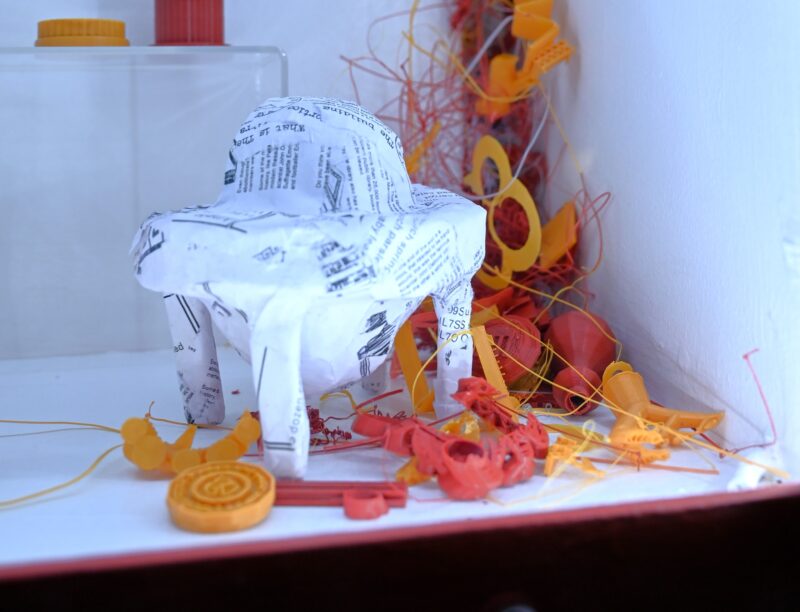
That sense of accumulation extends into the present. Manchester-based sculptural artist Hathaikan Kongaunruan has been commissioned to create a new interactive work in response to the Portico’s original receipt book, while Manchester-born writer Pam Galloway contributes a specially commissioned poem about the Library. Rather than sitting apart from the archive, these works feel folded into it – part of the same ongoing process of interpretation, annotation, borrowing and returning.
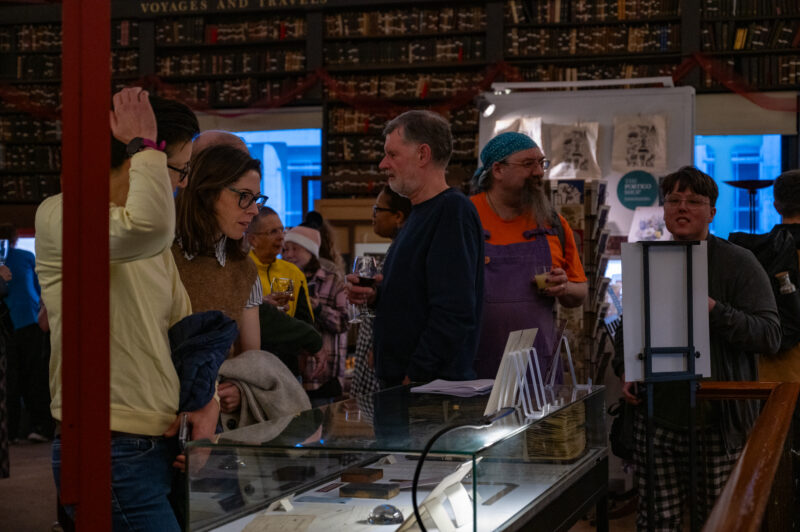
The exhibition also opens that process up to visitors. Through a time capsule project, you’re invited to write your own memory of the Portico on a postcard, to be stored in the archive and reopened in 2076. It’s another gesture that shifts the perspective slightly: the library is not just something to look back on, but something still being made – through small, often unnoticed acts of care and contribution.
The Portico is embarking on Portico Reunited – an £11 million capital project that will transform and future-proof this Grade II* listed building while preserving its remarkable 25,000-volume collection and archives. This once-in-a-lifetime project will reunite all three floors of the Portico for the first time in over a century through a lift, creating the UK’s most sustainable historic library – a place for heritage, literature, creativity, and community. Read more here.