














Opening Night: Built for the Hallé at The Bridgewater Hall
Johnny James, Managing Editor
Book now
Opening Night: Built for the Hallé
Always double check opening hours with the venue before making a special visit.
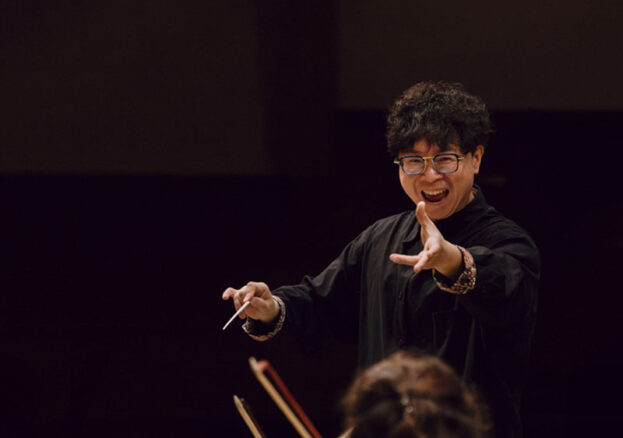
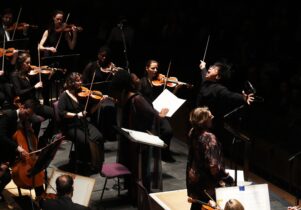
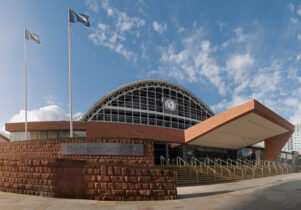
A grand, philosophical journey through life is only the beginning of this Hallé concert, which opens the 2026/27 season and marks 30 years since The Bridgewater Hall became the orchestra’s home. Featuring a world premiere and Beethoven at his best, it celebrates a venue that has sat at the centre of Hallé performances for three decades.
Liszt’s Les préludes takes its title from a poem by Alphonse de Lamartine, which sees life’s cycles of calm and storm as mere beginnings, introductions, to something bigger: “What is our life but a series of preludes to that unknown song whose first solemn note is tolled by death?”. Liszt’s piece follows the poem’s arc, its love theme storming and softening before returning, transformed into a triumphant battle call as the soul returns to what Lamartine calls “danger’s post.”
A different kind of beginning follows, with the world premiere of James MacMillan’s Symphony No.6. It comprises four individual portraits of close family members, each represented by a different section of the orchestra, resolving into a fifth movement that brings the whole ensemble back together. Further details are scant, but it’s scored for a large orchestra, with an unusually rich percussion section that includes a siren among the tuned gongs and tam-tam.
The symphony’s premiere – a Hallé commission – is the first appearance in MacMillan’s year as the Hallé’s Featured Composer, with his music returning across the season, from a new Easter Festival built around his Seven Last Words from the Cross to a performance of his Christmas Oratorio later in the year. Such a sustained celebration suits a composer already recognised as one of the leading Scottish voices of his generation.
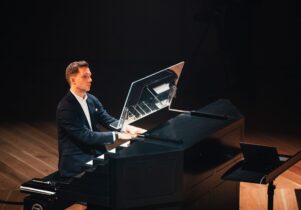
Written during the French occupation of Vienna, Beethoven’s ‘Emperor’ Concerto is a work of scale and authority, not least in the composer’s unprecedented instruction “Non si fa una cadenza” (“do not play a cadenza”), which saw him wresting complete control where the soloist would customarily improvise. It’s not called the ‘Emperor’ for nothing. A contemporary 1811 review in the Allgemeine Musikalische Zeitung called it “one of the most original, imaginative and effective, but also one of the most difficult of all existing concertos”. Stephen Hough, who is among Britain’s most admired pianists, is more than up to the task.
Three works, each concerned with something new or remade, and each asking a lot of the musicians on stage – perfect for the season’s opening night.