










Stravinsky’s The Firebird at The Bridgewater Hall
Johnny James, Managing Editor
Book now
Stravinsky’s The Firebird
Always double check opening hours with the venue before making a special visit.
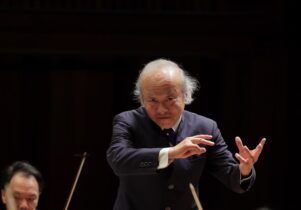
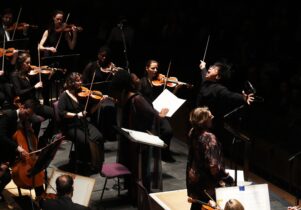
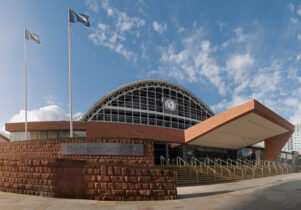
In 1996, Thomas Adès wrote a work celebrating the opening of The Bridgewater Hall – a four-minute showpiece, These Premises Are Alarmed, that the Observer called “packed with detailed, fascinating invention.” But for all its “utmost, fine-grained, virtuosity,” it doesn’t take itself very seriously: the percussion section calls for, among other things, nine large roasting tins. 30 years on, Adès returns to it, in the same hall, to open his first concert as the Hallé’s new Principal Guest Conductor.
Adès also conducts his own Asyla, the piece that made his name in the years just after. The title is the Latin plural of “asylum”, which can mean both a place of refuge and an institution for the insane – and the piece plays on this plurality. Its third movement, Ecstasio, is styled on a chaotic 1990s nightclub (stand down, Bez – not, for once, that one). It translates the heady energy and pulsating rhythms of techno and electronic music into a vibrant, chaotic orchestral score, before a handbrake turn towards a quotation from Wagner’s Parsifal.
Between these two pieces comes a world premiere: Gabriella Smith’s How To Be A Bird, written for tonight’s soloist Pekka Kuusisto. Hailed by the LA Times as “an outright sensation”, Smith writes music drawn from field recordings and underwater microphones, looking for what she calls “the joy in climate action”. Kuusisto is a fitting match – he’s written his own experimental piece for swallowed microphone (yep), treating recording technology as an instrument in its own right much as Smith does, and once built an entire BBC Proms programme around his love of the natural world.
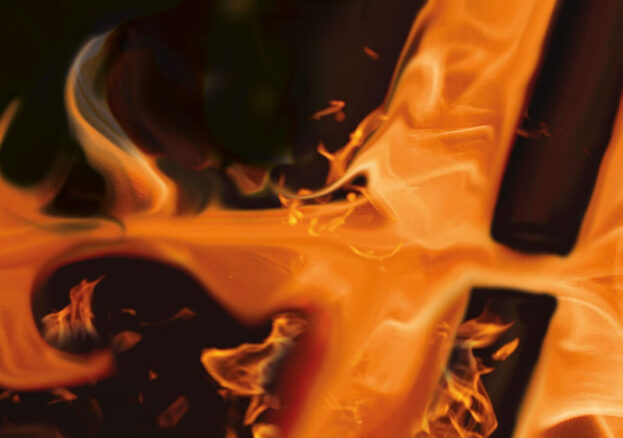
The evening closes with Stravinsky’s Firebird Suite, one of the happiest accidents in musical history. Sergei Diaghilev, head of the Ballets Russes, saw his first three choices to score a new ballet fall through before he gambled on an unproven 27-year-old; Stravinsky himself later admitted “I had not yet proved myself as a composer”. The gamble paid off spectacularly, launching a career and a sound world built from Russian folklore and orchestral colour that nothing before it had managed.
Four works, then, that each began as a risk on someone (to varying degrees) untested – Stravinsky in 1910, Adès in 1996, Smith tonight. If this is Adès’s opening statement as Principal Guest Conductor, it’s a heartening one: a little faith in emerging composers can go a long way.