




















Sandbox: The Ear as Muse with Lola de la Mata at SEESAW
Creative TouristBook now
Sandbox: The Ear as Muse with Lola de la Mata
Always double check opening hours with the venue before making a special visit.
This event has been postponed. Look out for news on auris festival, Manchester’s first dedicated sound art festival.
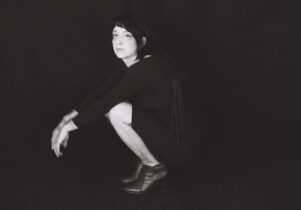
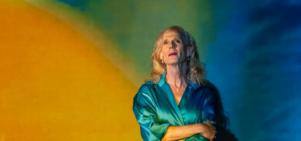
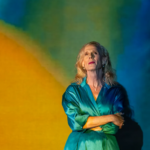
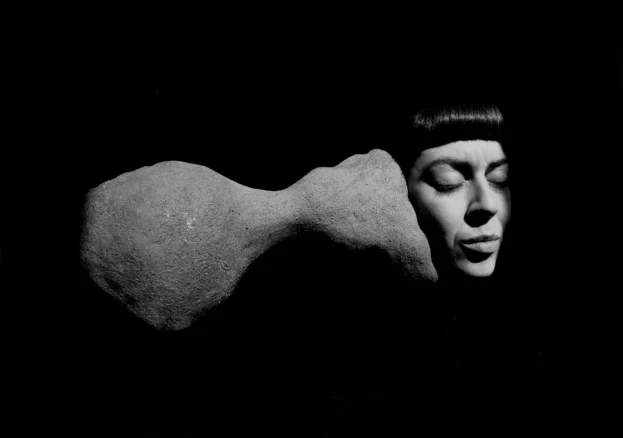
Most musicians who develop tinnitus treat it as an occupational hazard. Lola de la Mata treats it as raw material.
The Liverpool-based artist developed severe tinnitus and vertigo in 2019, after a restaurant employee plugged in an electric piano without checking the master fader, and the feedback landed at close range while she sat beside the speaker. The tinnitus and vertigo that followed were severe enough that doctors told her to give up both violin and listening to music generally. She responded like an artist, not only refusing to do either, but treating the damage itself as something to compose with.
She contacted a sensory neuroscience lab in New York that studies the cochlea, where researchers recorded her own spontaneous otoacoustic emissions – the faint sounds a functioning ear produces by itself. Those recordings became ‘Left Ear’ and ‘Right Ear’, two tracks on her 2024 debut album Oceans on Azimuth, built around instruments she designed and made herself in glass, metal, ceramic and ice, each one modelled on structures inside the ear. The album won an Oram Award, and one of its tracks was named “Most Unpleasant Sound” at the 2023 Sound of the Year Awards.
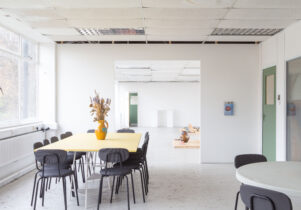
Since then, de la Mata – self-taught, and trained originally in weaving and printmaking rather than formal composition – has scored Robert Morgan’s stop-motion film entitled, umm, Stopmotion, and built the Tacet Friction Harp, a self-designed stringed instrument that generates sound through friction. It’s this instrument she brings to Sandbox, Modus Arts’ quarterly gathering for sound practitioners, at SEESAW on 23 July, for an evening billed as ‘The Ear as Muse’. Rather than a performance in the usual sense, the format is closer to a working demonstration: de la Mata builds and plays the harp live, talking through how a diagnosis she was told would end her career became the starting point for one instead.
Facilitated by Vicky Clarke and Wajid Yaseen, the session sits at the more discursive end of Manchester’s experimental scene, which suits an artist whose work only really makes sense once you know how the sound got made.