



















Democracy is fun. The People’s History Museum.

The insider guide to family holidays and things to do with kids – here, The People’s History Museum, Manchester’s newest museum grapples with a ‘big’ subject
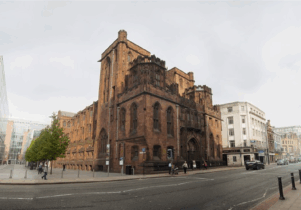
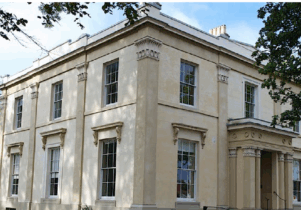
Earlier this year, after a £12.5m redevelopment that included the construction of an entirely new wing and the overhaul of the Grade II listed Pump House, the People’s History Museum re-opened for business. ‘This is a museum that matters to everyone,’ said Deputy Director Andy Pearce. ‘It tells the story of the march towards British democracy – it’s the only place in the UK that does that.’ So far, so worthy, right? Not a bit of it. The People’s History Museum handles political reform lightly, bringing historical fact to life via a range of hands-on and unusual exhibits. Our favourite is a kitchen table where you make up flat pack boxes – and then work out how little you’d be paid if you were eking out a living this way. As well as being a useful means of rebuffing complaints about pocket money, the museum gets the message across that democracy matters to us all, regardless of age. (Though if your kids remain immune to the museum’s charms you can always threaten to send them down the mines).
There’s a fair bit planned at the museum for kids this summer, including story telling sessions and crafts activities, plus a ‘Busy Bee’ explorer pack for little ‘uns that they can use (and wear) to get the most out of their visit. The museum is also one of the venues for this year’s Family Friendly Film Festival: it will be staging an after-hours screening of family classic Mary Poppins on 12 August. Expect spoons full of sugar and lots of ‘creative activities’ (that doesn’t include smearing jam on the walls, OK?). Tickets are £5 and go on sale on Friday 25 June.
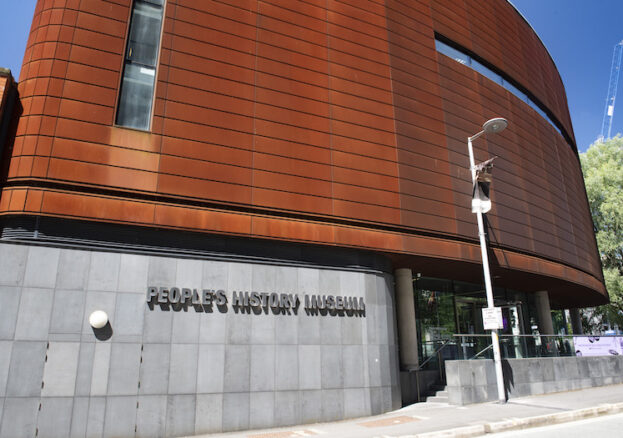
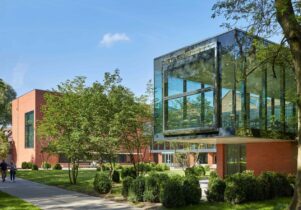
The museum building itself is a showstopper. Made of Corten steel, its striking rusty façade provides a contrast to its glass-and-steel or Portland stone neighbours. And form follows function: the museum’s largely windowless upper floors are wrapped in steel to provide the climate-controlled home for its collection. The ground floor is, however, glass-fronted, enticing passers-by inside and providing the building’s hub (this is where you’ll find a riverfront café, for example). ‘The change from the ground floor, which is light and airy, to the darker museum area, is deliberate. It creates the sense of an Aladdin’s cave,’ says Pearce. The Museum itself has doubled in size, allowing more of its collection to be on display, while the galleries trace a path through 200 years of political campaigning, from the Suffragette movement to the Trade Union movement. And the Museum opens with Carried Away, an exhibition that takes a sideways look at protest over the past 100 years: in it, it displays photographs of protestors such as the Suffragettes, many of whom were forcibly removed (or carried away) by the authorities they challenged.
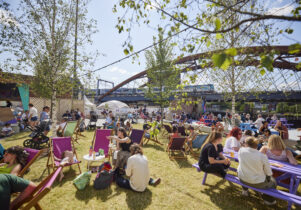
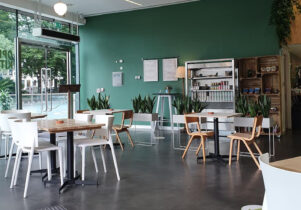
The museum’s location is also crucial to its draw for families. Its sunny, riverfront Left Bank cafe (with terrace over the River Irwell) boasts a wartime-inspired menu that’s not only unusual but really rather good. We can also recommend the Mark Addy pub on the opposite side of the river – cross the bridge and you’ll find yourself in Salford. Come back and you’ll be in Manchester. Confused? It’s a fine distinction but one that these sister cities are respectively proud of. On the Manchester side and immediately opposite you’ll also find the Civil Justice Centre, a building nicknamed the ‘filing cabinet’ and which apparently houses the largest plate glass window in Europe. Stand beneath it and squint up at the sky. Feeling dizzy yet? The People’s History Museum is open daily. Free entry.
Return to the city guides home page
Below: radio broadcaster and ‘national treasure’ Stuart Maconie talks to the Museum’s Andy Pearce:
Images: main and bottom thumbnail courtesy People’s History Museum; top thumbnail courtesy Susie Stubbs, image below Kippa Matthews.