
























The City for Incurable Women at HOME
Johnny James, Managing EditorBook now
The City for Incurable Women
Always double check opening hours with the venue before making a special visit.
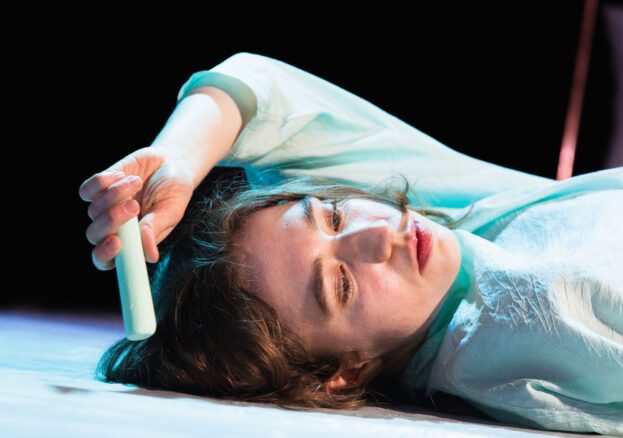
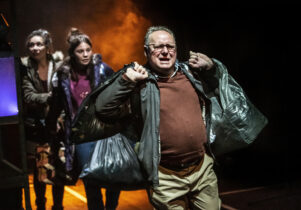
At Paris’s Salpêtrière hospital in the 1880s, women diagnosed with ‘hysteria’ were made to perform their illness in public. Doctors would ‘stimulate an attack’ through hypnosis or ovarian compression, and turn the women’s suffering into spectacle – staged for an audience and presented as science. It’s a disturbing foundation for The City for Incurable Women, the critically acclaimed show arriving at HOME from British-German theatre collective, fish in a dress.
While rooted in a very specific history, the show’s subject matter isn’t totally confined to the past. Rather our storyteller Kae traces the history of hysteria onto the present moment – the long tail of ‘madwoman’ stereotypes that bleeds into wider misogynistic narratives (we’ve all seen Inside The Manosphere by now, right?). What begins as research becomes something more unstable – a blurring of distance between past and present, observer and subject.
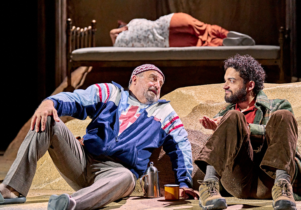
Intensifying that instability, performer Charlotte McBurney inhabits multiple roles, slipping between doctor, patient and narrator in a way that dissolves any fixed point of authority. The effect is disorienting by design, drawing the audience into uneasy territory, especially where their own voyeurism is called into question. After all, the history the show traces is not just medical, but theatrical.
At the Edinburgh Fringe, the production was described by The Guardian as “half lecture, half nightmare” – a piece that moves queasily between analysis and embodiment. There is humour threaded through it, too: a mix of “high camp” and absurd, cutting through the darkness without letting anyone or anything off the hook.
Founded in 2024, fish in a dress create work from a queer-feminist perspective, and this debut production earned a load of four and five star reviews on its Edinburgh Fringe run, ahead of this short tour. At its core is a simple, unsettling proposition: theatre within theatre, where the audience’s own complicity is called into play.