
















Sir Stephen Hough, piano at The Bridgewater Hall
Johnny James, Managing EditorBook now
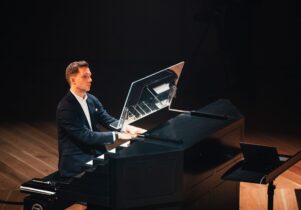
Sir Stephen Hough, piano
Always double check opening hours with the venue before making a special visit.
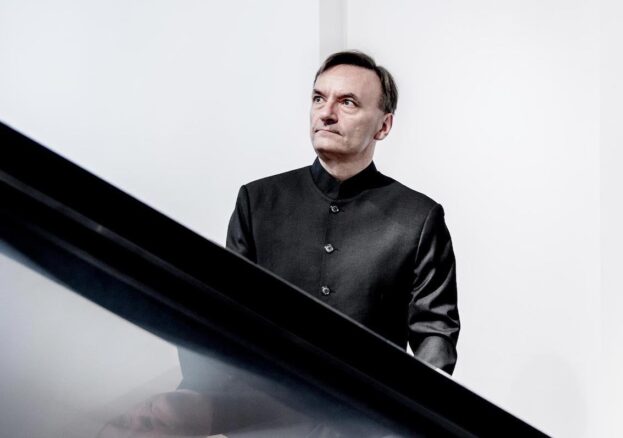
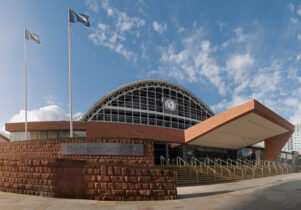
Sir Stephen Hough returns to The Bridgewater Hall with a recital built around a deceptively simple idea: the piano miniature. Hough, one of Britain’s most admired pianists, starts with works that compress entire worlds into just a few minutes, before opening out into something more expansive and ambitious. Back in the city where his musical life began, there’s something fitting about that shape.
The first half of this concert gathers works all called Klavierstück – literally, ‘piano piece’ – but this belies the variation within them. The Romantic giants Schubert and Brahms use the form for music of deep inwardness, the former undercutting tender lyricism with restless unease, and the latter bringing the emotional weight of a composer nearing the end of his life.
Schoenberg’s Six Little Piano Pieces, composed “as if in a creative frenzy in a single day”, strip expression down to its essentials, capturing the grimness and uncertainty of a Europe about to be torn apart by war. Stockhausen’s Klavierstück III, meanwhile, sees the young, groundbreaking composer take the idea of compression to an extreme, packing his radical ideas into just 30 seconds.
At an even shorter 13 seconds, Beethoven’s Bagatelle Op.119 No.10 flashes by with the quickness of a joke or aside. Think of it as a sharply drawn sketch that says exactly what it needs to and then disappears. What links all these short pieces is not scale so much as intensity – the sense of composers testing how much feeling, wit or strangeness can be concentrated into a small frame.
From there, the programme opens up into more sustained works. Beethoven’s ‘Waldstein’ Sonata arrives with all the momentum and brilliance of a work determined to redraw the limits of the instrument. As musicologist Maynard Solomon puts it, “With the Waldstein sonata, Beethoven [created] sonorities and textures never previously achieved”, pushing both piano and player towards new extremes.
Schumann’s Carnaval follows as a different kind of expansion: a sequence of theatrical character pieces, moving through masks, personalities and musical codes with a dreamlike fluency. And in the closing Mary Poppins Suite, that sense of theatre reaches its final form, with Hough’s own arrangements transforming songs from the 1964 film into something virtuosic, affectionate and mischievous.
This arc says something about Hough himself. He’s always been more than an interpreter – he’s also a composer, writer and arranger – and this recital feels shaped by that wider imagination. There’s also a pleasing sense of return built into the whole thing: a major artist back in the city where he took his first musical steps at Chetham’s and later the RNCM. In his own words, “It’s very special always to play in the city where I learned so much about music and life.”