






















Nation at HOME
Johnny James, Managing EditorBook now
Nation
Always double check opening hours with the venue before making a special visit.
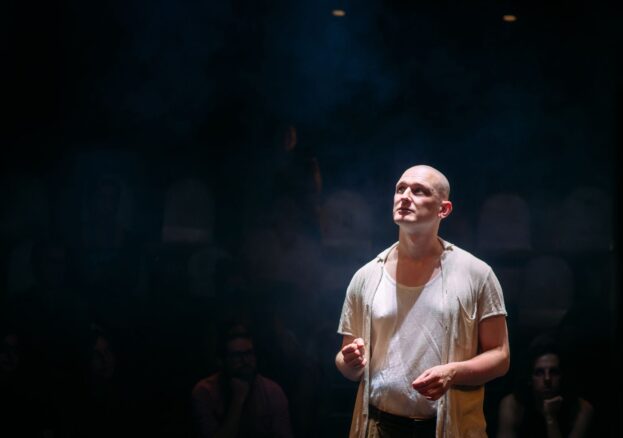
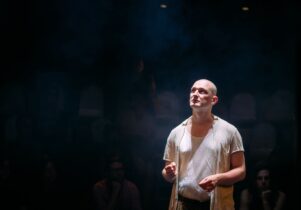
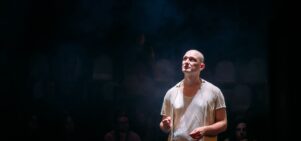
A butcher. A baker. A farmer. A dog. A stranger knocking at the door. A town where nothing much happens – until a body is found in the town centre. In Nation, Sam Ward asks an audience to imagine a place like this together, then turns that act of collective imagination back on itself. What begins as a story about a town becomes something darker: a fable about nationhood, national identity, and the political power of the stories people choose to believe.
Written and performed by Ward for his company YESYESNONO, Nation comes to HOME following a sold-out Edinburgh Fringe run and a wave of strong reviews. In one way, it’s a topical parable about xenophobia and belonging. But its subject is also slipperier and more disquieting than that, tracing how communities narrate themselves into being, how outsiders are made, and how the act of nation-building can so quickly become, in Wards words, “an act of violence”.
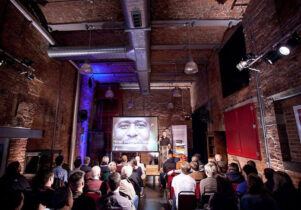
There is very little here in the way of conventional staging. Instead, Ward builds the town through language: simple sentences, repeated phrases, direct address, with subtle shifts in light and sound doing just enough to sharpen the image. The rest is left to us. We are not just watching this place from a safe distance, but helping to conjure it into existence, assigned roles within it, asked to look at one another, and reminded that we were all there to see what happened.
It’s a slow and unnerving unravelling. A stranger arrives. Fear begins to circulate. Suspicion fixes on the outsider. The people who thought they knew themselves, and each other, start closing ranks. Nation feels uncomfortably close to familiar headlines, but its real force lies elsewhere: in the way it shows how hatred is shaped not only by ideology, but by narrative, repetition, and the stories a community tells to make itself feel better.
By the end, the question is not just what happened in this fictional town, but how it was constructed in the first place – and how easily we were persuaded to go along with it.