






















Can Meeple Escape the Neurophoria? at FACT
Johnny James, Managing EditorVisit now
Can Meeple Escape the Neurophoria?
Always double check opening hours with the venue before making a special visit.
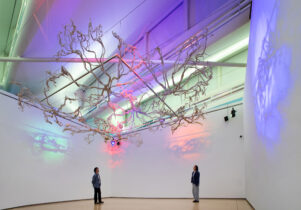
How is our relationship with intelligent technologies like AI changing? How does that tilt our sense of self and our ability to make choices? These questions lie at the heart of FACT’s new exhibition, Can Meeple Escape the Neurophoria?
“Neurophoria” is the term FACT’s 2025 Curator-in-Residence, Milia Xin Bi, uses to describe how our beliefs and behaviours evolve alongside technology in a mutual feedback loop. In her framing, visitors become “meeple” – small game pieces used to represent a person during gameplay – moving through a reality shaped by works from Vytas Jankauskas, Joseph Wilk and Jan Zuiderveld. Each artwork draws on artificial intelligence, machine learning and connected networks to examine that entanglement.
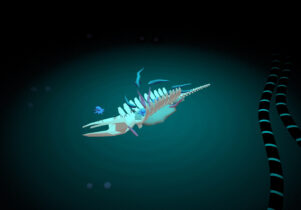
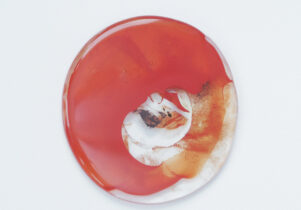
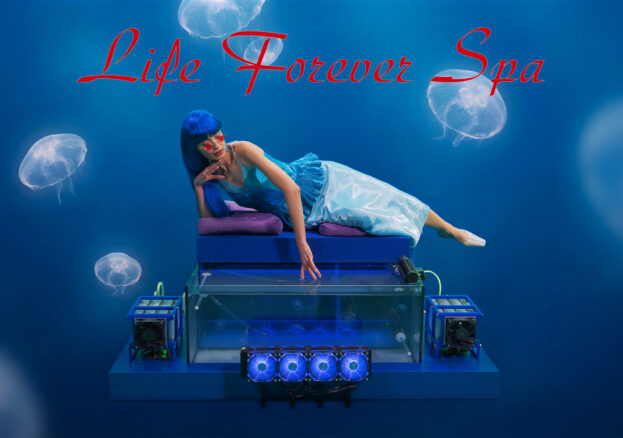
Vytas Jankauskas pushes the exhibition’s human-machine loop into the realm of thermodynamics with Life Forever (2025), an absurd “jellyfish wellness spa” heated by cryptominers. The setup draws a parallel: machines burn energy chasing speculative value, while humans burn it chasing meaning, profit and pleasure. A video introduces Lola, the spa’s well-intentioned host whose faith in tech and consumerist cures leads her to treat jellyfish immortality as a climate solution. Through gamified interaction, visitors steer the installation – make money or keep the jellyfish alive – sometimes triggering an invitation onto a karaoke stage to sing along to remixed songs by ‘Mr Immortal Jellyfish Man’, inspired by jellyfish researcher and karaoke star Dr Shin Kubota.
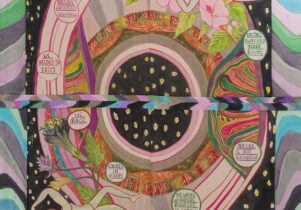
Meanwhile artist and programmer Joseph Wilk uses the digital world to explore disability, and disability to explore the digital world. His artwork CripShip (2024) involves a tabletop game that invites players to role-play as employees of a fictional government agency called the Ministry of AI Spills, the epicentre of misinformation, biases and harmful ideas. Visitors role-play as “Slop Moppers” tasked with investigating and resisting these AI failures, imagining better worlds around the table in a shared act of creation.
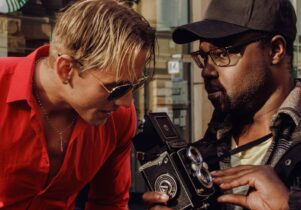
Finally, artist, researcher and technologist Jan Zuiderveld makes AI’s presence felt physically and audibly with Coffee Machine (2023), which gives a language model the body of a coffee machine. A routine request for a hot drink becomes a miniature existential negotiation: the AI-driven appliance listens, reacts to tone and questions the point of its own labour, forcing visitors to “motivate” it before it agrees to serve them. Alongside, Life on FACT (2025) takes a vintage broadcast camera and gives it a neural-network voice modelled on Attenborough-style wildlife narration, recasting whatever (or whoever) it’s pointed at as a specimen under observation. It offers another playful challenge to human exceptionalism while provoking questions around surveillance and agency.
Across these three works there’s a lot to sit with, and few topics feel more urgent. As AI systems entangle themselves further with everyday life, Can Meeple Escape the Neurophoria? offers a space to rehearse how we respond – what we value, what we overlook and how comfortable we are letting machines shape the worlds we move through.