





















Rachel Maclean: They’ve Got Your Eyes at FACT Liverpool
Johnny James, Managing EditorVisit now
Rachel Maclean: They've Got Your Eyes
Always double check opening hours with the venue before making a special visit.
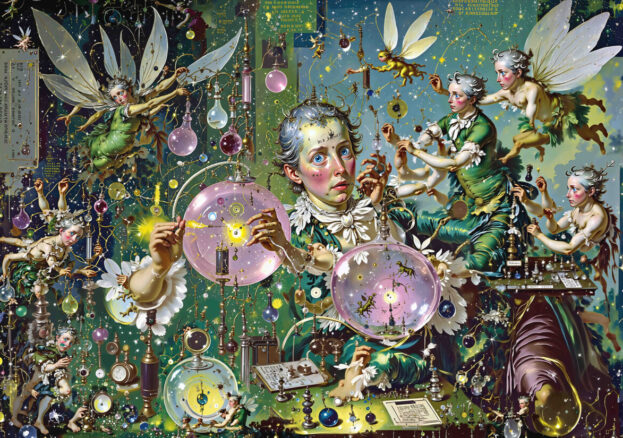
A relatively new kind of unease is becoming the baseline of everyday life – the sense that what we project, willingly or otherwise, is no longer entirely ours. That something is watching, learning, and quietly getting better at being us. Rachel Maclean sits with that unease in They’ve Got Your Eyes, a theatrical new installation that is, reassuringly, as playful as it is deeply unsettling.
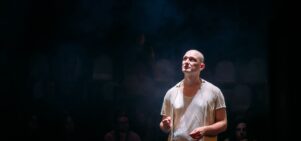
Maclean has built her reputation on vividly constructed worlds across a variety of media including video, digital print, sculpture, and VR. Here she goes further, using AI models trained on her own image and artistic archive to create a multi-channel film in which she is the sole performer. The result is a slippery hall of mirrors. Identity distorts and authorship – a relatively stable idea back in the days when a Prompt Engineer was just a punctual tradesman – starts to wobble.
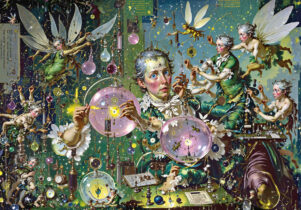
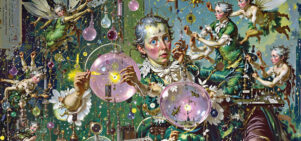
At the centre is “The Gentleman”, a strange mash-up of tech bro and Victorian inventor, who discovers how to generate… fairies. What begins as a grand pursuit of progress (a word that feels increasingly up for debate) quickly becomes compromised as a rivalry emerges with another “Gentleman” – one with even greater fairy-spawning powers. As both of their egos multiply, the fairies flicker between flattery and mockery, at times disarmingly clumsy, at others unnervingly perceptive.
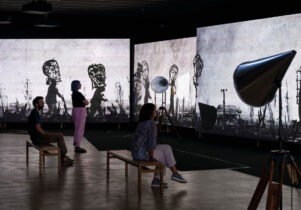
The installation unfolds across multiple screens, with 3D-printed sculptures leaking out into the gallery space, dripping with slime – a reference to the “AI slop” that contemporary culture is increasingly blessed with. It’s funny, unsettling, and just a little bit grotesque. The title hints at something deeper too: a play on familial resemblance while also suggesting theft – the idea that AI might run off with the way an artist sees the world. With artists around the globe pushing back against the use of their work to train AI models, it’s an important idea to be interrogating right now.
Running alongside Only Slime: Afterlife – another exhibition exploring world-building and control – Maclean’s work feels like a warped origin story. If machines are learning to imagine, what exactly are they inheriting from us? Don’t expect an answer, exactly. But do expect a sharp, stylised look at the fantasies of power driving the whole thing – and the fragile egos underneath.