





















Prokofiev Symphony No 5: RNCM Symphony Orchestra at RNCM
Johnny James, Managing EditorBook now
Prokofiev Symphony No 5: RNCM Symphony Orchestra
Always double check opening hours with the venue before making a special visit.
Heroic, bright and beautiful. Prokofiev’s Fifth Symphony does everything a Soviet victory symphony was supposed to do. It also leaves enough cracks in the varnish to make you wonder whether he meant it.
Prokofiev had returned to the Soviet Union in 1936, just as Stalin’s terror took hold, and was never allowed to leave again. By 1944, with the war turning, the censors’ grip had loosened a little. He wrote the Fifth that summer at a state-run retreat east of Moscow, and he called it – in language pitched perfectly for official ears – a “hymn to free and happy man”. Fate helped a bit too, when at the Moscow premiere, he had to hold his first downbeat while artillery salutes rang out to celebrate Soviet troops pushing into Germany.
The grandeur is real: broad, cinematic melodies and great outbursts of orchestral colour. But so is the friction. The bucolic opening theme, first sung softly by flute and bassoon, is later dragged through dense discords before emerging as a victory parade, which Prokofiev’s Soviet biographer hailed as the symphony’s clearest glorification of the human spirit. The scherzo starts as a sardonic game of cat and mouse and ends like a runaway locomotive. And the finale, just as it heads for its triumphant close, splinters into a tangle of wrong notes and rude trumpet interjections, before a single bang in the home key shuts the argument down.
The symphony was an instant success, at home and abroad. Within a year, its American premiere had put Prokofiev on the cover of Time magazine. Within three, the Soviet authorities were denouncing his music.
While the Fifth challenges the entire orchestra, the first half of the concert puts tremendous pressure on a single player. Rachmaninov’s Third Piano Concerto has long been regarded as the Everest of the piano repertoire. Even its dedicatee – then the world’s leading pianist, Josef Hofmann – refused to touch it. For years, few pianists besides Rachmaninov himself would. And for good reason: after a disarmingly simple opening melody, which Rachmaninov said “simply wrote itself”, ceaseless chords and runs place huge physical and technical demands on the soloist.
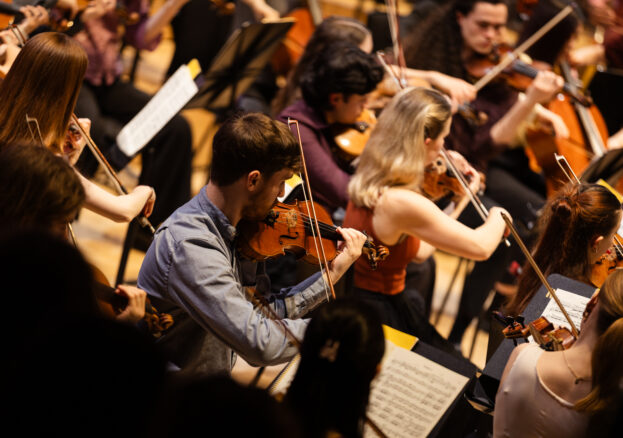
Today it’s a fixture of piano competitions, where juries watch closely for how pianists navigate its minefields. Madeleine Brown won this year’s RNCM Concerto Competition playing it, and performs it again here with the RNCM Symphony Orchestra, conducted by Valentina Peleggi and RNCM student conductors. The evening opens with a new work by one of the college’s composition students.