


















Q&A: Jonny Greenwood on There Will Be Blood, eight-hour drones and the limits of recorded music
Johnny James, Managing Editor
Book now
Jonny Greenwood with the Hallé
Always double check opening hours with the venue before making a special visit.

Jonny Greenwood is back in Manchester for two very different Hallé concerts this January.
First, his eight-hour organ piece, 606 Years of Reverb, shakes the memories from Manchester Cathedral’s walls. Later at The Bridgewater Hall, Greenwood joins the Hallé on ondes Martenot to perform his score for There Will Be Blood live to picture.
Ahead of his visit, he talks about what microphones miss, why he might be the opposite of “spiritual but not religious”, and There Will Be Blood as his “perfect gateway drug”.
On 606 Years of Reverb
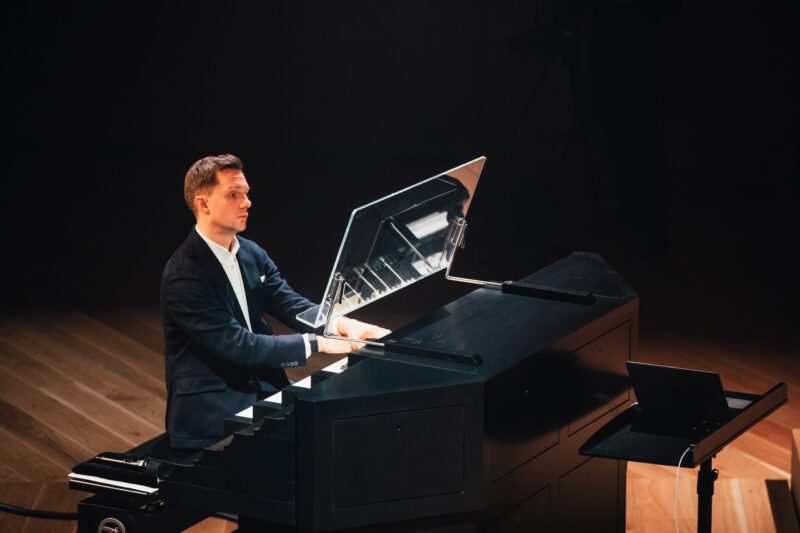
Why eight hours? What were you looking for in the duration that a shorter piece couldn’t give you?
When you hold down clusters of notes on an organ, the complexity of the overtones generates all these new melodies. These are very different for every chord, and also for every organ, every room, and every position in that room. That kind of complexity feels worth more than 10 minutes. Not that many (any?) people stay for all 8 hours, though it’s probably healthy for us all to spend time wondering if we really have got somewhere better to be or something better to do. Maybe stay as long as your daily average phone screen time is (and I’m sure mine is as alarmingly high as anyone else’s).
If someone knows your film scores, your concert hall music, or your work with Radiohead, what in this piece might they recognise as you?
Not much? Perhaps it’s that with Radiohead we will use every instrument we can with enthusiasm: glockenspiels, sleigh bells – anything. Pipe organs are really glorious things, that recordings never reproduce properly.
You’ve said the piece is about shaking loose the sounds soaked into a building’s walls. Manchester Cathedral has 600 years of history, including bomb damage in the Blitz and again in 1996. It’s also architecturally significant, said to have the widest nave of any English cathedral. What are you hoping this building and its memories will do to the piece?
I spent a lot of time in churches in Italy playing and writing this: the more time I was there, the more I felt the history of the room. All those centuries of people gathering to celebrate or mourn, worship or console. People often describe themselves as ‘spiritual, but not religious’: perhaps I’m the opposite. Communal gatherings, like a concert, are more moving to me than solitary spiritual thought. Of all the books in Church, it’s the parish records that fascinate me most. All those births, marriages and deaths, those lives lived, and all the music and voices in that space over the centuries.
On the day, the audience add their own sounds to the building’s memories – footsteps, coughs, people coming and going. Do you think of them as part of the piece?
In my imagination, it was always meant to be (eventually) too loud and colourful to hear much else. But hearing those colours change as you move through the church is absolutely part of the music, as is being with other people.
Could the piece ever be released, and what might that look like? Or does it only really exist on the day?
Only if it was released as either an organ, or perhaps a large speaker that only plays the music in full from start to finish. I don’t think it’d be welcome clogging up Spotify servers, and anyway having the music only ever live is the point really. The space the organ is in, and its history, is as important as the music from the organ.
Read more about 606 Years of Reverb at Manchester Cathedral →
On There Will Be Blood
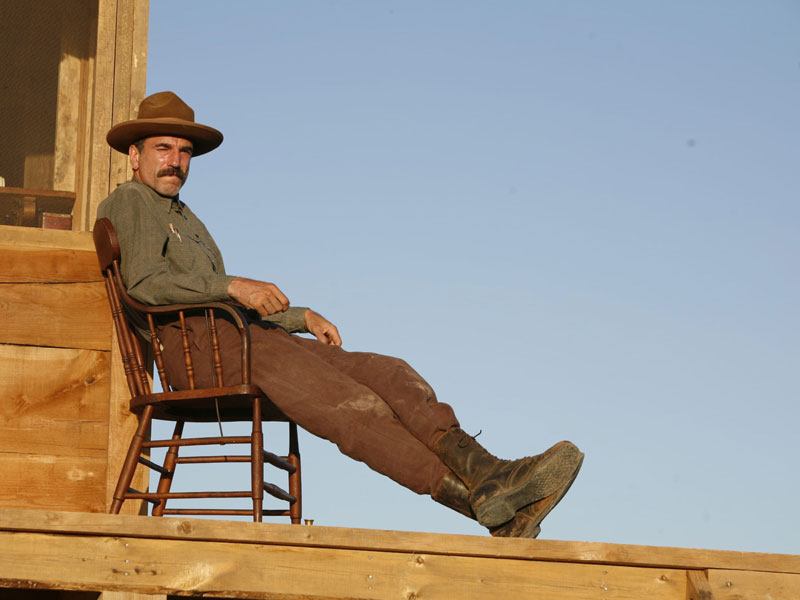
What does a live orchestra bring to There Will Be Blood that the recorded soundtrack can’t?
It just sounds better. When we record soundtracks, my favourite thing is getting the director on the other side of the glass – i.e. in with the orchestra, when it’s playing. I mean, microphones are great, and engineers super-talented – but there’s nothing like a live orchestra, and still no way of accurately putting the sound they make into speakers or earphones.
Paul Thomas Anderson often cuts his films to your music, rather than the other way around. A live screening turns that on its head: the orchestra has to hit every cut. What’s that like as a player?
It’s easy for the players – but very hard for the conductor. None of it was written or recorded to a click track, so it’s all done in the old fashioned way of notated tempos, and a feel for the music. It’s astounding what conductors like Hugh are capable of.
In There Will Be Blood, how do you think about the way the ondes Martenot sits with the orchestra – what’s its role?
It’s meant to be a hint of modernity in the score – the film ends in 1927, which nearly coincides with the invention of the Martenot.
Touring arenas with Radiohead and playing with the Hallé might seem like distant worlds from the outside. How different do those experiences feel on stage?
There’s the same sense of being surrounded by extraordinary musicians. My favourite thing to do when playing with Radiohead is just listen to the others – Thom singing, my dear brother playing bass – that’s a crazy privilege to have. And it’s the same with the Hallé. Just amazing players.
What does There Will Be Blood mean to you now that you’ve scored so many more of Paul Thomas Anderson’s films?
It was the perfect gateway drug: a chance to write lots of music for these characters and these landscapes. It got me hooked on hanging out with classical string players, and trying to write music worthy of the sounds they make.
Read more about There Will Be Blood in Concert at The Bridgewater Hall →