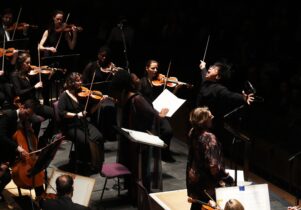























National Symphony Orchestra of Ukraine at The Bridgewater Hall
Johnny James, Managing EditorBook now
National Symphony Orchestra of Ukraine
Always double check opening hours with the venue before making a special visit.
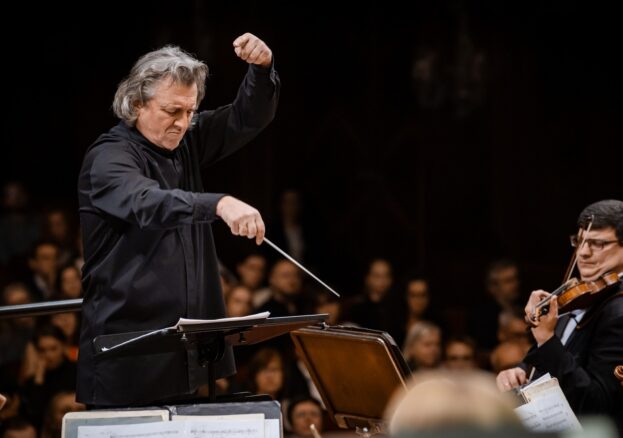
Musical ambassadors for their country, the National Symphony Orchestra of Ukraine return to The Bridgewater Hall with a programme that pays homage to our nations’ bonds, alongside two Beethoven landmarks.
They open with Maxim Berezovsky’s Symphony in C – the first Ukrainian symphony and a landmark in the country’s musical history. Composed in the early 1770s, it was long thought lost before resurfacing in the Vatican archives in the early 2000s. Its rediscovery prompted competing claims over cultural ownership, with Russia naming it their own. Heard here, its place in Ukrainian musical history is firmly pronounced.
Musically, the symphony speaks in the clear, poised language of the Classical era. Its three concise movements unfold with balance and lightness, favouring bright string writing, cleanly articulated wind lines, and transparent textures over dramatic weight. Shaped by the Italianate style Berezovsky absorbed while studying in Bologna, the music carries its authority lightly – elegant, proportioned, and precise.
At the centre of the evening, pianist Maria Pukhlianko is soloist in Beethoven’s Piano Concerto No. 5, the ‘Emperor’. Written during the French occupation of Vienna, it’s a work of scale and authority, not least in Beethoven’s instruction “Non si fa una cadenza” (“do not play a cadenza”), which saw the composer wresting complete control where the soloist would customarily improvise. Heroic virtuosity is balanced by a slow and restrained movement, before the finale bursts forward with a sense of exhilaration.
Delius’s Two Pieces for Small Orchestra shift the focus to England, and a very different register. On Hearing the First Cuckoo in Spring and Summer Night on the River are miniature tone-poems built from soft string backdrops and exposed woodwind lines, articulating an English pastoral tradition grounded in stillness, colour and atmosphere. Placed next to Berezovsky and Beethoven, they offer a quieter, but no less eloquent voice within the programme’s national dialogue.
The concert closes with Beethoven’s Symphony No. 7, premiered in 1813 at a charity concert for soldiers wounded in battle and immediately embraced by audiences. Rhythm is the engine of the entire work, its repeated patterns driving almost every bar. From the inexorable tread of the Allegretto to a finale that’s near-frenzied in its relentless drive, this symphony refuses to let the music stand still.
Framed at the outset as a meeting of national voices, the programme shows how music can hold difference and solidarity at once. Slava Ukraini!