























Ghost of the AI Empire at The Martin Harris Centre
Johnny James, Managing EditorBook now
Ghost of the AI Empire
Always double check opening hours with the venue before making a special visit.
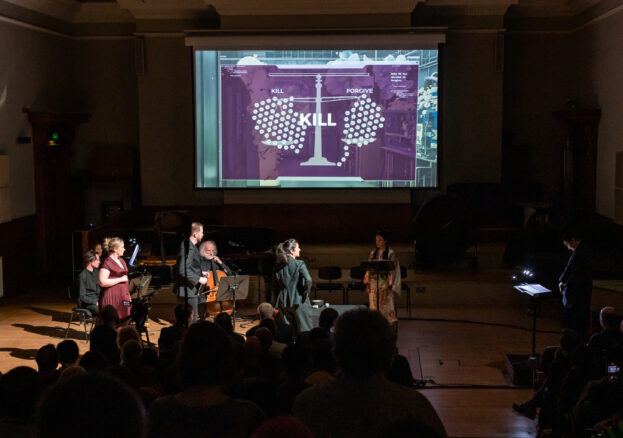
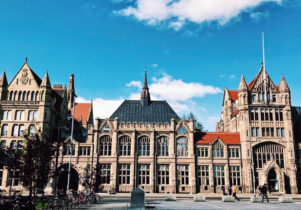
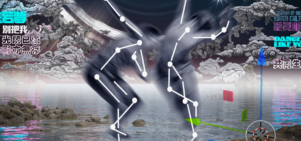
Ghost of the AI Empire is the kind of idea that usually comes to Manchester with a gargantuan budget, a massive venue and a long run. Built on Japan’s most famous ghost story, this sci-fi opera invites the audience to steer the plot from their phones, while AI contorts the sound of the musicians in real time. And yet it’s on for one night only, at the 350-seat Martin Harris Centre. Intriguing.
The story is based on Yotsuya Kaidan, a 19th-century play from kabuki, Japan’s flamboyant popular theatre. It follows Oiwa, a wife betrayed by her husband and poisoned, who returns as a ghost to take her revenge. Here, we flash forward to 2100. Nations wage war through AI as Japan revives its medieval traditions. Woven through it all is a Noh dance – a centuries-old form of Japanese theatre performed in carved masks, and built on slow, stylised movement.
And that’d be plenty for most opera companies, but Operactive Arts have you steering the whole thing from your seat. Using your phone, you’ll vote on some big moral dilemmas and the cast will adhere to your calls, meaning nobody – not even the performers – knows how it ends. Elsewhere, you become the god of the sea, using your phone to raise or calm the waves on a sailor’s crossing. Every choice is anonymous and optional, and no musical or technical knowledge is needed.
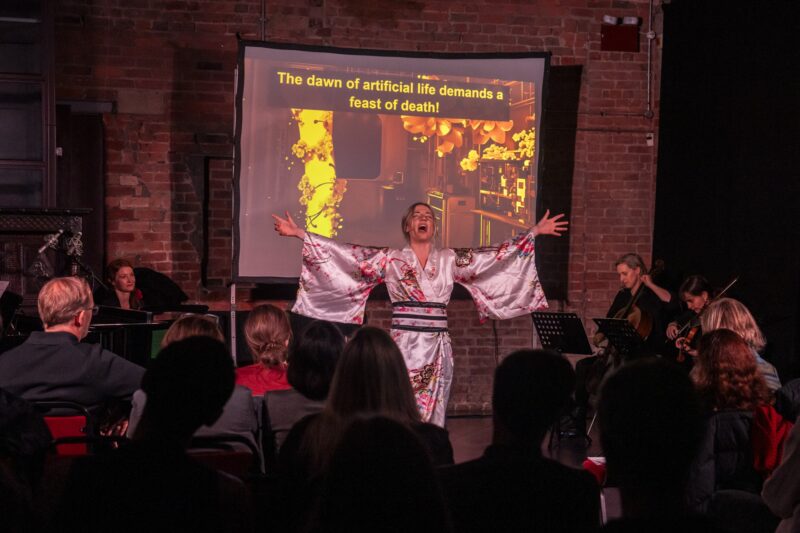
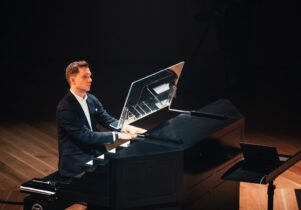
AI also plays an active role in the production, though the company is keen to stress that it assists the creative process rather than serving as the source of it. For one it processes the audience’s choices in real time to keep the story flowing smoothly. More intriguing is ‘live timbre transfer’, which changes the character of an instrument’s sound as it’s played. Real-time neural audio tools augment the tones of the piano, violin and cello while preserving each player’s human expression, including pitch, rhythm, phrasing and vibrato. The trio improvise live, with layers from the AI responding to the room.
There’s some serious form behind the creative team, too. The music comes from Ryan Morgan, inaugural winner of the London Mozart Players’ Samuel Coleridge-Taylor Prize, and Atzi Muramatsu, whose work has featured in three BAFTA-winning films. Among the singers are Edinburgh International Festival Rising Star of Voice Luke Terence Scott, and Olivia Moss, winner of Glyndebourne’s Gus Christie Award, as Oiwa.
Considering how loaded with ideas this thing is, it’s worth getting there early for the pre-concert talk, where creator Dr Alexandra Huang-Kokina, a Bicentenary Fellow in Music at the University of Manchester, joins Creative Manchester’s Professor Michelle Phillips to talk opera, technology and what happens when the audience gets a say.