









The Black Lights in Blackpool
Johnny James, Managing EditorBook now
The Black Lights
Always double check opening hours with the venue before making a special visit.
Across a decade of breathless overuse, the word ‘unprecedented’ has long since lost its meaning. The White Hotel decamping to Blackpool, though, is a turn-up.
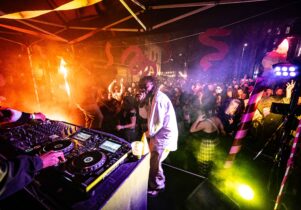
A sanctuary for Greater Manchester’s misfits and a crucible for its artists, The White Hotel is a singular presence in the North West. It’s a place that still understands clubbing as a space of liberation and possibility, where experimental urges are tested under pressure. From hosting 250 shows a year to opening sister venue Impiety Hour, the 330-capacity ex-mechanics garage has had a head-spinning decade. And like many a 10-year-old in the region, it’s getting carted to the Lancashire coast for its birthday.
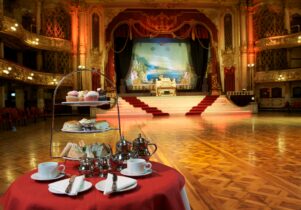
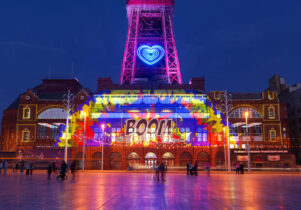
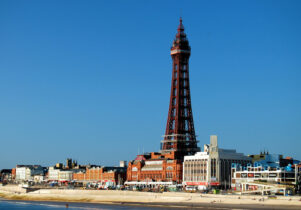
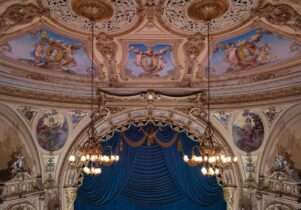
Presented by The White Hotel, The Black Lights is a three-day festival programmed across Blackpool’s heritage venues and tourist landmarks. From the Tower Ballroom and Winter Gardens to the Opera House, North Pier and even Blackpool Pleasure Beach, The White Hotel is retooling some of the town’s most recognisable sites for one-off, site-specific performances that lean into memory, atmosphere and scale.
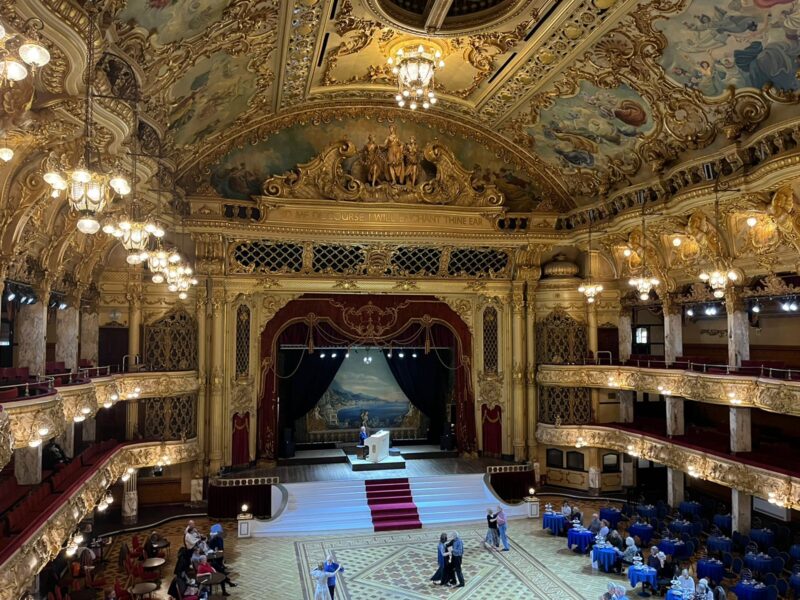
Blackpool Tower Ballroom was built for collective escape – glamour, release, the promise of something briefly bigger than everyday life. And it still carries a residual charge, even as the world around it has changed. In places like this, memory doesn’t fade so much as loop, replaying itself in fragments rather than stories – a condition Mark Fisher described as hauntology. Few artists embody that idea more directly than The Caretaker, whose music draws on decaying fragments of ballroom melodies: waltzes and slow dances looping, warping and dissolving as if the room itself is remembering past nights.
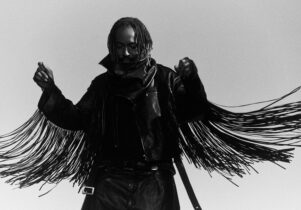
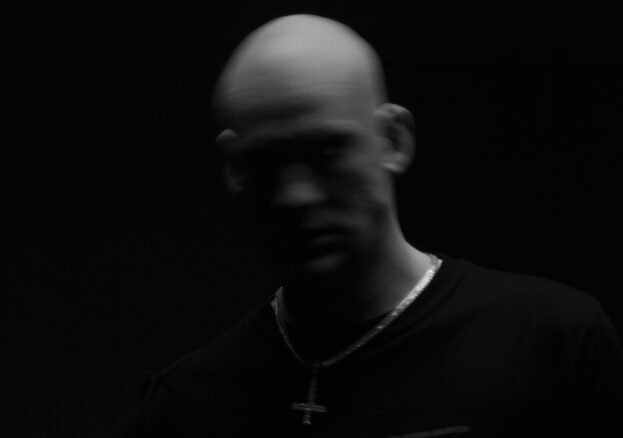
If The Caretaker works through memory and erosion, Blackhaine pushes in the opposite direction – visceral, confrontational and physical, collapsing music and movement into something close to ritual at the Winter Gardens. From there, the programme fans out across different registers. Mica Levi’s newly commissioned work for The BBC Philharmonic Orchestra brings orchestral weight into dialogue with Blackpool’s grand, timeworn architecture. A Guy Called Gerald performs his landmark album Black Secret Technology, while Kode9 – an OG of early dubstep – pairs up with DJ Flight, a foundational figure in drum & bass.
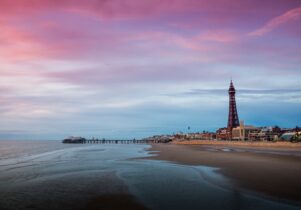
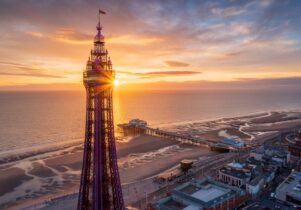
Step back and the Blackpool connection starts to make sense. This town was once the engine room of Britain’s domestic tourism – a pressure valve for working-class life, built to concentrate intensity, escape, glamour and release into a few days by the sea. When the cultural gravity shifted elsewhere, the future the town was built around failed to arrive – but the infrastructure remains. The lights still switch on, people still climb the tower, the rituals all repeat. It’s a town shaped by repetition and collective memory, worn into buildings and attractions that feel out of sync with the present. The Black Lights treats that condition not as backdrop, but as raw material.
Many artists on the line-up emerged from moments when electronic music felt genuinely future-facing – when new sounds were bound up with new ways of gathering. They’re not presented as heritage acts, but as traces of futures left unresolved. In Blackpool – a town with plenty of its own – that sense of possibility returns without nostalgia. It’s briefly switched back on. A kind of afterimage. A kind of Black Light.