



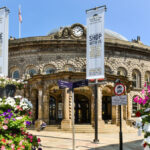
Cabaret Voltaire at Albert Hall
Johnny James, Managing EditorBook now
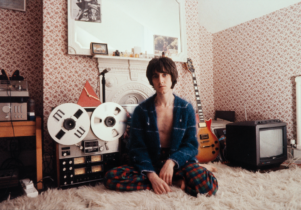
Cabaret Voltaire
Always double check opening hours with the venue before making a special visit.
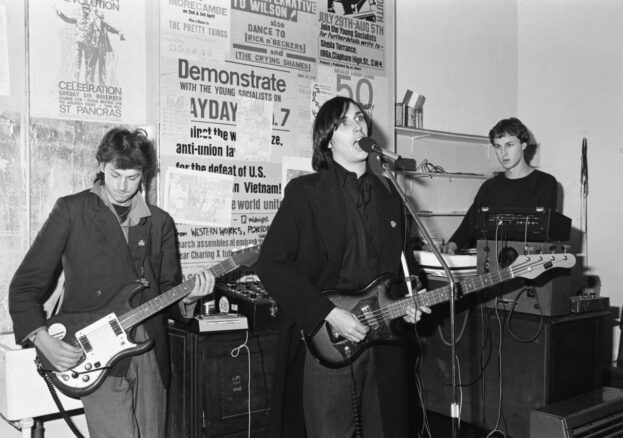
Sheffield is where Cabaret Voltaire dreamed up the tape experiments and DIY electronics that helped define industrial music, but Manchester has its own claim on the band. Through Factory Records, the trio played some of the label’s earliest nights at the Russell Club and featured alongside Joy Division and The Durutti Column on 1979’s A Factory Sample, the release that helped establish Factory’s early identity. That, alone, is probably a good enough reason to catch their upcoming show at Albert Hall.
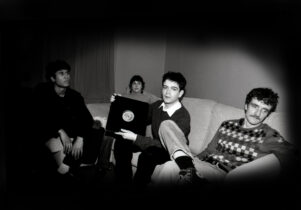
But there’s a much bigger one. Richard H Kirk (guitars) kept the Cabaret Voltaire name alive as a solo concern after the rest of the group fell away, releasing new material as recently as 2021, the year he died. Chris Watson (tape and sound manipulation) and Stephen Mallinder (vocals, bass) – who had not performed together as Cabaret Voltaire in more than 40 years – have reunited specifically to honour him, on a tour billed as final.
Mallinder calls the live set “built from scratch but faithful to the original tracks,” reconstructed with the group’s own vintage equipment and methods rather than simply copy and pasted onto (much handier and more reliable) modern gear. The setlist (*spoiler alert) spans the tape-experiment days and early singles like ‘Nag Nag Nag’, through the video work of their Doublevision label, and into the club-facing sound of later tracks such as ‘Sensoria’ – which has closed every night of the tour so far.
It’s a huge gamut of styles. The earliest records are abrasive and confrontational, built from tape loops, primitive drum machines and hostile noise – the sound that got the trio filed alongside Throbbing Gristle as industrial pioneers in the first place. By the mid-1980s that hostility had loosened into something warmer, closer to electro-funk, and by the decade’s end the group had teamed up with Chicago house pioneer Marshall Jefferson for a record that leaned fully into acid house. Scanning the tour setlist, expect the lot.
It’s the last tour and the final bow of a seminal band. Bernard Sumner has credited them with teaching New Order that music could be made without guitars. Artists as varied as Trent Reznor and Martin Gore have cited them as a direct influence, and industrial fans still rank the group alongside Throbbing Gristle and Einstürzende Neubauten as one of the genre’s founding three. More than 50 years after their first gig, this is your final chance to see the band that did it first, doing it one last time.
WIN Cabaret Voltaire tickets + signed live album
We’ve teamed up with Albert Hall to give away a pair of tickets to Cabaret Voltaire on 19 October, plus a signed copy of What Time Is It Really?
Enter below by 12pm on Wednesday 14 October.