
























All That Matters at The Edge
Johnny James, Managing EditorVisit now
All That Matters
Always double check opening hours with the venue before making a special visit.
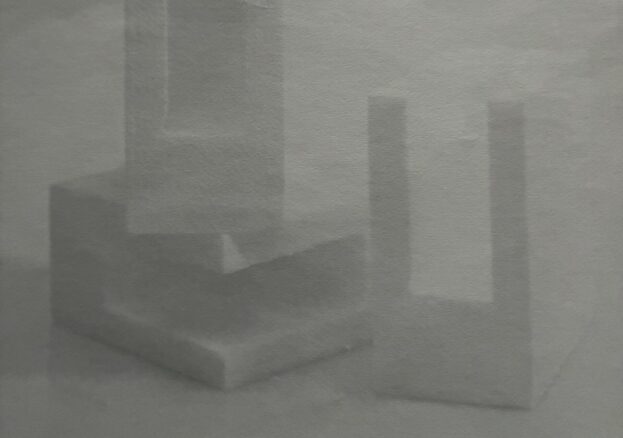
It’s not always easy to get a handle on the world as it is now. The structures that shape it, from global supply chains to data clouds, are vast, slow-moving and impossible to see in full. At The Edge Gallery, Alan Jones’s All That Matters starts from that position, focusing on what we can actually grasp from such systems: fragments.
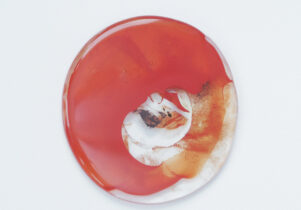
One of those fragments appears in Orphaned Objects, where Jones photographs polystyrene packaging once used to transport consumer goods. Designed to be discarded, these forms return here as remnants of a global system – objects that have travelled, been used and cast aside into “some other place”. In all likelihood these materials – reduced to detritus, residue, trace – will outlive not only the goods they package, but the hands that packaged them.
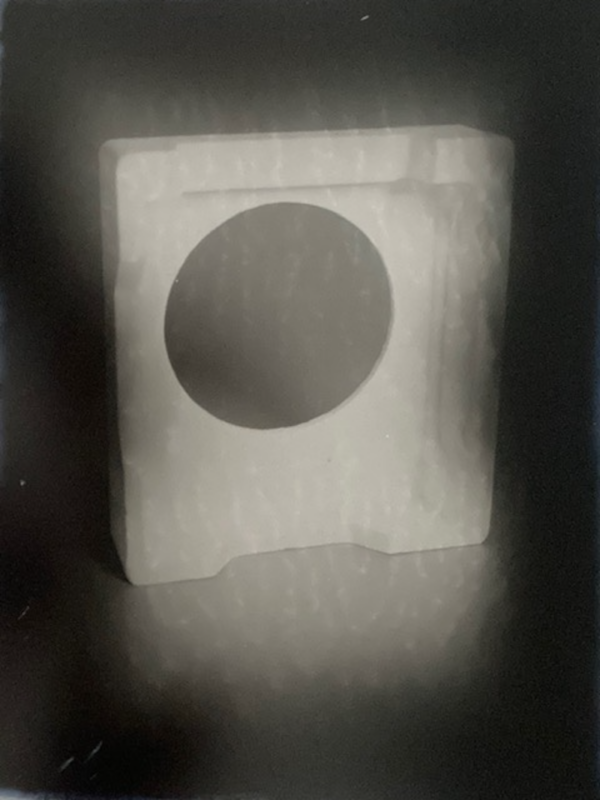
That sense of duration runs through the exhibition’s processes as much as its subjects. Jones works with analogue and contact techniques, drawing on what he describes as “the redundant and the acquired” – obsolete photographic materials, expired papers and discarded forms that carry their own histories. Glass plate negatives, silver gelatine prints and out-of-date stock each bring their own timeline into the work, embedding a slower, more cumulative sense of time within the image itself.
The thinking behind all this connects to philosopher Timothy Morton’s idea of the hyperobject – phenomena so vast and distributed that they cannot be grasped in full. This resonates with the broader ecological urgency running through the show, too. Climate change, plastic oceans, forever chemicals and other diffuse environmental conditions are ongoing realities and yet their scale and timeline may overwhelm comprehension.
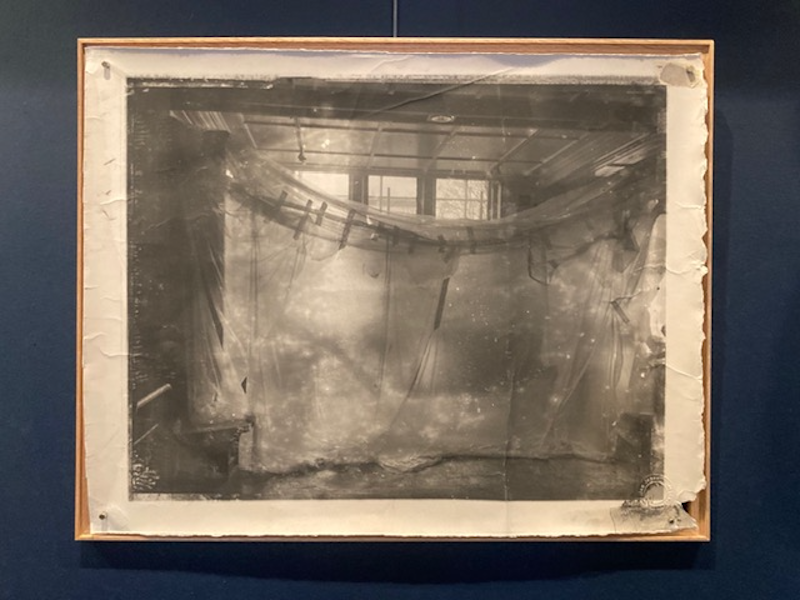
Jones describes the work as a way of flagging “an ecological crisis that is slowly consuming us”, shaped by the pace and scale of mass manufacturing. Why present it now? Because he sees the present moment as a tipping point – one that calls for a rethink of how we live, what a more harmonious world might demand, and what responsibility and care amount to when cause and effect are widely dispersed.