









Peripheries at 1853 Studios
Maja Lorkowska, Exhibitions EditorVisit now
Peripheries
Always double check opening hours with the venue before making a special visit.
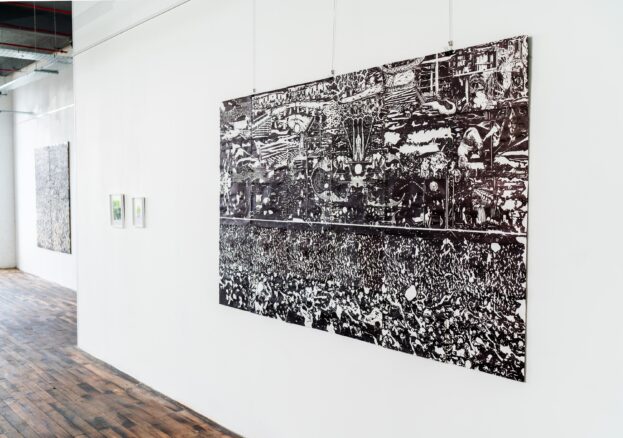
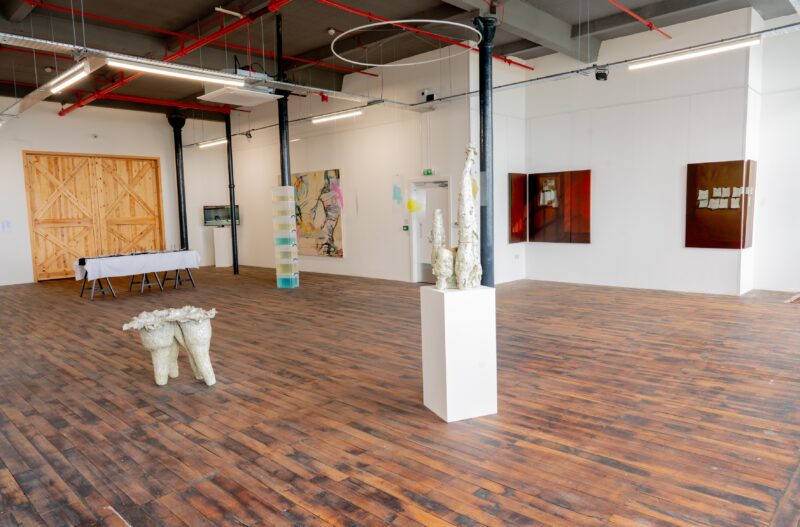
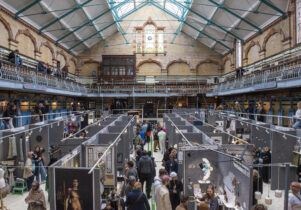
The word ‘periphery’ is underused, I think, given how much of our world is occupied by the spaces, communities, and locations existing on the margins. 1853 Studios’ current exhibition Peripheries at Mill 2 Gallery spotlights precisely these subjects through the work of eight artists chosen through an open call.
As with any group display, the approaches are varied and often rooted in very personal perspectives of what a periphery means to the individual. For this reason the journey between the works is not a smooth one: there are no puzzle pieces that seamlessly fit together but rather a collection of separate, intimate responses to one theme.
It’s two square metres of Where’s Wally’esque tension but instead of a guy in stripy clothes, you’ll be looking for a bleeding mouth.
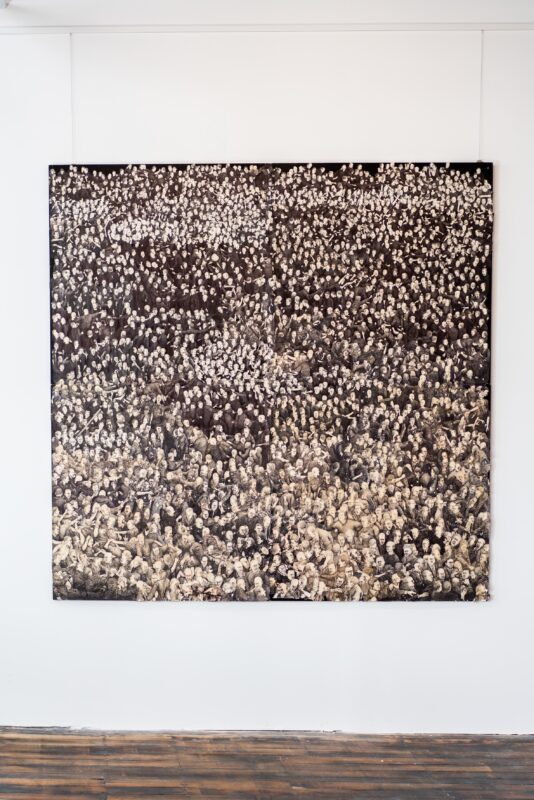
The large, airy space is perfectly suited to the monumental drawings of Thomas Christian Bradley. Though created with the humble biro, these works are far more than mere doodles. In Cockfight, Bradley presents a monochrome collage of faces and hands on the precipice of violence, hands raised and mouths open, right before the first punch lands. It’s two square metres of Where’s Wally’esque tension but instead of a guy in stripy clothes, you’ll be looking for a bleeding mouth. While standing in front of it, I heard someone say: “I can basically hear them fucking shouting!” and honestly, they weren’t wrong.
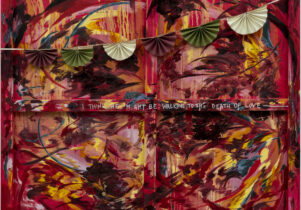
On the opposite wall, the runway forms in Daisy Fulton’s painting Burn the Candle escape definition and offer a new vision with every blink. Perhaps the edges it’s addressing is the literal periphery of vision, leaving something for the viewer to enjoy even as they’re walking away.
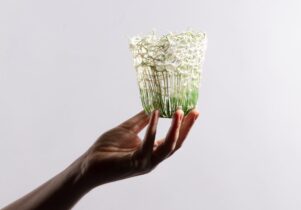
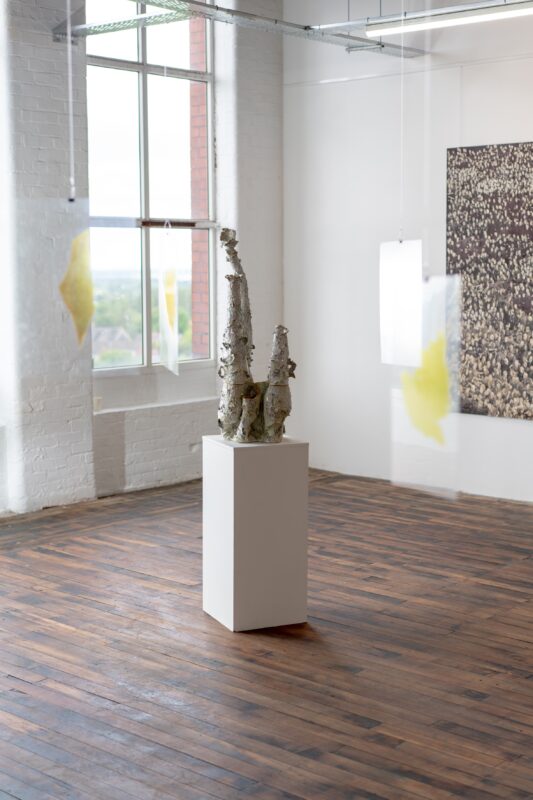
Elsewhere, artists Kamil Duda, Rabia Begum and Rio Darwin focus on the history and socio-political realities of place. In the duo of works: Bone for Chalk and of Salt and Stone, Darwin’s shell-like ceramic forms balance fragility and resilience. They are closely connected to her East Yorkshire roots, and the quickly disappearing Holderness Coast. Nearby, Begum’s Faded Maps on transparent Perspex hang delicately in the centre of the space, so subtle that viewers can easily collide with them. They hold hand drawn outlines of countries ravaged by war – ghostly reminders of global margins.
Duda’s Labour of Yesterday / Obsolete features stacked plastic boxes filled with water from the Salford Quays (how can it be so blue?!) and are accompanied by a film documenting the process of its collection on a rainy day. Perhaps the most conceptually opaque of all of the works on display, it’s described by the artist as an “intervention to work the waters again”, aiming to recognise what has been lost in the aftermath of the dock’s regeneration.
These pieces are best viewed alongside the artists’ commentary to fully unlock their context, but they succeed at triggering our curiosity and continue to slowly trickle through long after leaving the show.
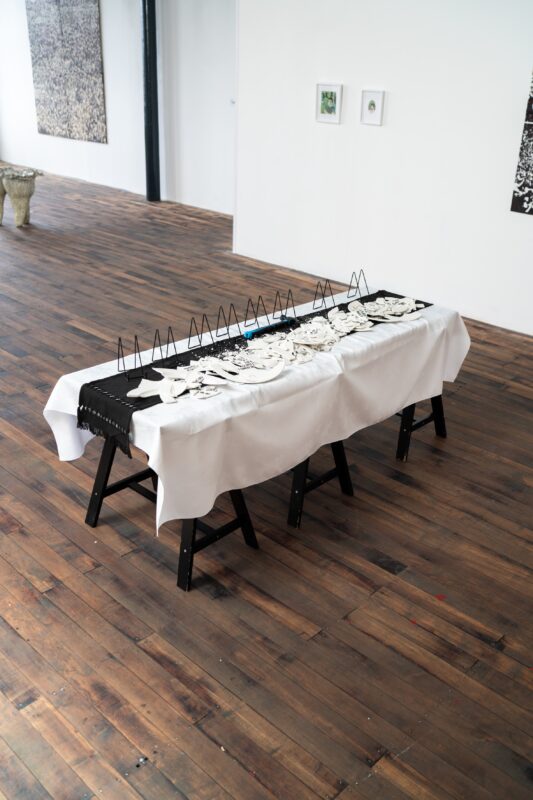
While much of the work is static, the exhibition’s opening featured a visceral performance of poetry and plate-smashing from Gemma Lees in She’s in Pieces. Consisting of a poem about homelessness printed across the plates, the artist read out each stanza and smashed the plates one by one before a triumphant finale. The remaining shards are a powerful symbol of the sorrow and pain she endured. Unfortunately I missed the live, one-off performance so a printed version of the poem would have helped in fully appreciating the work’s depth.
There are quiet, gentle moments in Peripheries too. Iqra Tariq’s two portraits Reflection and Connection II are inspired by Mughal miniatures, depicting members of the immigrant community as a meditation on marginalisation. Carving out one’s place in a new society with language barriers, cultural customs and a longing for the familiar all make for a complex experience, beautifully captured in these tiny, focused paintings.
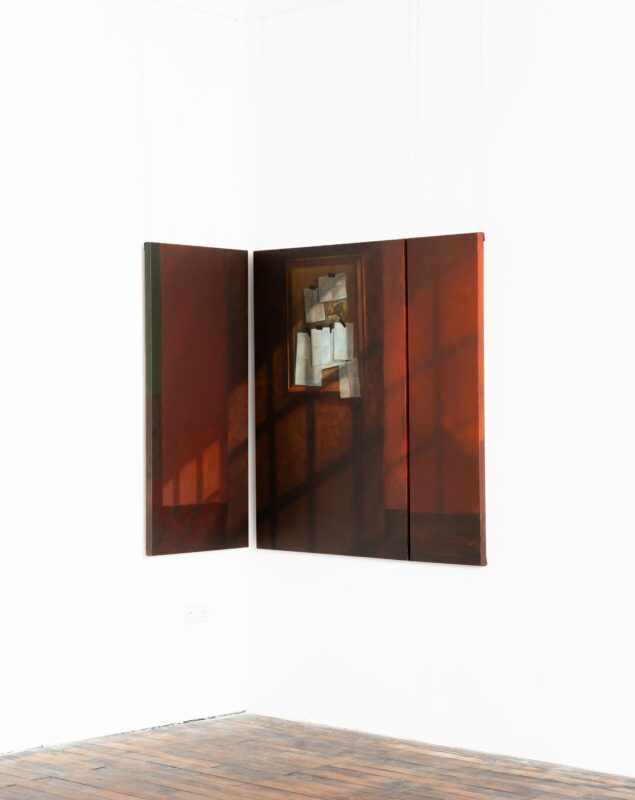
Elsewhere, the draw of Mahrokh Mofid Nakhaei’s shadowy paintings are hard to resist – they pull you in with their late afternoon light while also creating something of a cosy peripheral corner themselves. They consist of multiple canvases that snake around the corners of the room, immediately creating a more immersive viewing experience. I’ll admit, I had to steal a glance at the windows to check whether the light in the paintings was the artist’s masterful illusion or a real life sunset – a particularly satisfying curatorial touch. While The Sixth Wall and Fragmented Messages use a trompe l’oeil effect to depict pieces of paper taped to a wall, it’s the sense of calm they exude that commands the most attention. It extends far beyond the paintings into the surrounding space – as a result, time seems to slow down and a sense of comfort washes over you for as long as you stand in front of them. You won’t want to move.
Ultimately, Peripheries doesn’t try to provide one simple answer to what it means to exist on the margins but instead proves it to be a shifting, personal landscape. The show rewards a slower pace and gives each work room to breathe; the more time you spend in the space, the more these separate voices begin to hum together.
It’s worth mentioning too that all of the artists in the show have been paid a fee, and those who were unsuccessful received feedback from the judging panel, setting a vital example for the industry.