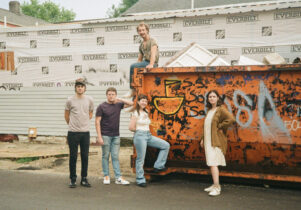






















First contact with Baba Israel.
Dec 15, 2009 | Comments: 0
Andrew Shanahan discovers that Manchester’s Contact has friends in global places
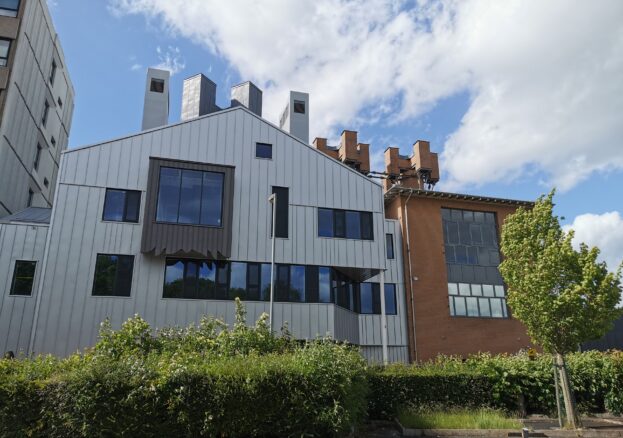
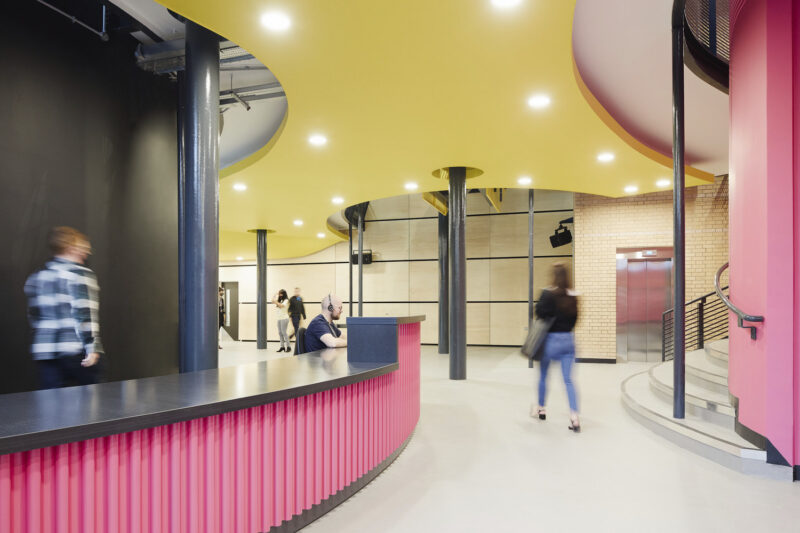
It has been a decade since the Contact Theatre – the strangely turreted arts venue jammed in behind Manchester Academy – signalled the seriousness of its new ethos by changing its name. To reach a new generation of theatre-goers it decided that the prime barrier was the class, race and age connotations of the word theatre itself, so the Contact Theatre became, simply, Contact. For once, a re-branding seemed to inspire genuine change and now the organisation is heralded as holding the blueprint for how arts organisations should engage young people, going from strength-to-strength with its own productions, and creating a niche for itself in the city’s crowded theatre scene.
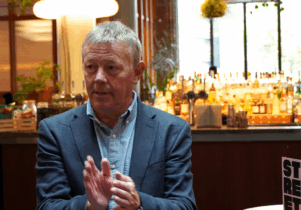
Contact has recently crowned that success by luring hip hop star, actor and performer Baba Israel to take over as the new artistic director – prising him from his day job touring with the likes of OutKast and The Roots and from the grip of New York in the process – a move that has raised more than a few eyebrows. ‘Friends did warn me when I told them I was moving to Manchester that after a while I’d be like, “there’s nothing to do!” For one thing, having this job that would never be the case, but I definitely get the sense after a few months of being here that there would always be cool things to check out in Manchester. Even though it’s a smaller city there’s a real concentration of venues for arts, for theatre, for music. It’s definitely not lacking there,’ says Israel, sinking back into Contact’s deep sofas and emphasising the rhythm of his words with the practiced hands of a hip hop artist.
How then, did Contact manage such a coup? What incentive was there for someone who is still very much active as an artist and, in fact, played at Contact not so long ago? ‘You have to look from a global point of view to understand what Contact is and how successful it is. I wrote about the work of Contact in my thesis for grad school and if you talk to people on an international basis who work in theatre, then they know what Contact is and how it works. For me it’s the model venue, it’s the one place I’ve seen that really successfully merges an inclusive community arts space and a professional arts venue in one building. It’s very, very rare that you find those things co-existing.’
The post of artistic director lasts for three years and already Israel has sketched out ambitious plans about how he wants to see the venue progress, not least when it comes to what Israel sees as one of the major resources they have. ‘We have an unbelievable pool of talent here in Manchester, in terms of actors, poets, hip hop artists, musicians, visual artists – the people I’ve encountered here, I would put them up against anyone in New York. In fact, I have bought Manchester artists to open mics and classes in New York and everyone has been blown away. I think Contact should be playing a role in developing those artists so that they’re touring nationally and internationally.’
If the talent on his doorstep is one aspect of the new direction for Contact, the other is borrowed from his native New York. ‘When I started out I was at the Nuyorican Poets Café and on the same night I would see a young hip hop artist and then I’d see a beat generation guy in his 60s, who might have been my dad, then you’d get a traditional poet reading out of a book. Part of what Contact does really well is that it broadens people’s sense of what theatre can be. People may come here and see a music show and then find out about a theatre show that’s of interest to them. They might come and be part of an open mic and then see something about music that interests them. They may see a DJ spin and see that he’s in a theatre piece next week.’
Collaboration seems to be a keyword for Israel’s vision for Contact and, as well as hinting at the ‘rich conversation’ he thinks could exist between students and the Contact’s traditionally non-uni audience, he’s already been pleasantly surprised by old-fashioned Mancunian co-operation. ‘If anything, I’d say Manchester is more collaborative than New York in some ways. For example I’ve already done a collaboration with Manchester Museum and Urbis, and we’re talking with Cornerhouse about working together. There’s a sense that organisations have a real drive for Manchester to be recognised as a cultural centrepoint in the UK. So it feels exciting to be part of that.’
Contact, Oxford Road, Manchester M15 6JA. Watch Baba Israel and Yako 440 explain the background to their music (and do some great beatboxing with a didgeridoo).
Andrew Shanahan is an award-winning freelance writer with work ranging from journalism with The Guardian and The Independent and national magazine titles to scriptwriting with the BBC. He has also developed a series of innovative writing projects for the internet with Moving Audio.
Image: Katy Much.
Possibly related to this:
- Underwater. Jamie Hewlett at Contact. Jamie Hewlett is best known as the artist behind Gorillaz – but his latest project is a world away from...