
























My Hat and My Other Hat at PINK
Johnny James, Managing EditorVisit now
My Hat and My Other Hat
Always double check opening hours with the venue before making a special visit.
Not so long ago, wearing a hat was almost as essential as wearing trousers. Take a look at any photograph of 1920s Britain. Every head was dressed to the nines – trilbies, bowlers, cloches – with each choice of headgear signalling who you were and what you were up to. Alas, hats have since gone the way of pocket watches and calling cards, our naked crowns and unsightly barnets now brazenly flaunted without a second thought. For shame.
As a 1940s advert put it: “If you want to get ahead, get a hat!”. Stockport, for its part, really did get ahead – riding the great hatting boom to become one of the world’s great centres of hat-making. It churned out felt hats by the million, worn across Britain and far beyond – an industry commemorated by Hat Works, the UK’s only (for shame) museum dedicated to the hatting trade.
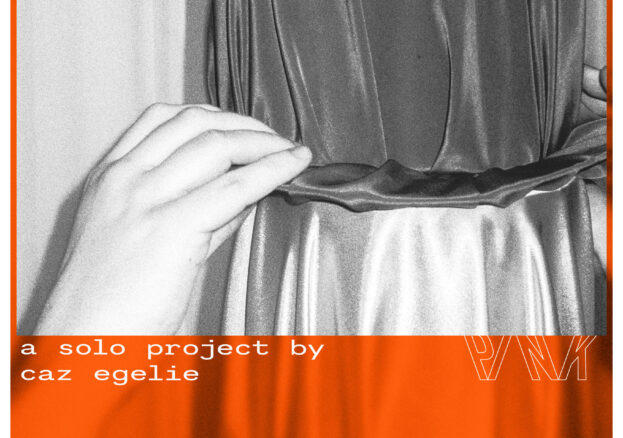
It’s the kind of local history that feels slightly surreal now, which makes it ideal territory for Caz Egelie, a Dutch artist whose work thrives on theatre, role-play and the unstable line between costume and the authentic self.
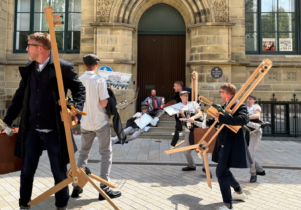
In My Hat and My Other Hat, Egelie takes Stockport’s hat-making legacy and builds it out into a full environment. Developed during a two-part residency, the exhibition begins with archival research into Stockport’s hatting industry, before opening out into something more theatrical – a constructed space that feels part medieval tavern and part costume rental, storage room or stage set.
It’s a place for objects and ideas that have fallen out of favour to be refashioned, with characters emerging that may or may not reveal something of the person beneath. Performance (by you) is part of the installation, interrogating the boundaries between self and character, performer and spectator.
Egelie’s work often circles these blurred lines, using humour and artifice to prod at bigger questions around authorship and authenticity. Here, that approach feels especially well matched to the subject. Hats, after all, have always done double duty: they announce who you are, while giving you the option to be someone else entirely.
For a town built, in part, on headwear, this is a fittingly offbeat tribute – one that finds new uses for what might otherwise be old hat.