
















The temple of 1,000 bells.

Brazilian artist Laura Belém signals an early start for this year’s Liverpool Biennial

The Brazilian artist Laura Belém walks a tight rope between the idealistic and the cliché. Her installations embrace world-weary concepts yet keep the viewer enchanted. Take Enamoured, her installation at the Venice Biennale in 2005, in which a pair of rowing boats with searchlights on timers sought one another out through the moonlit canals of the city – an unapologetically romantic expression of love and loss in a place famous for such sentiments. Likewise, in her film Shipwreck, Belém offers a quixotic vision of a divisive subject. Having returned to Portugal in search of her family’s roots, she makes an ink drawing of a conquistador’s ship that slowly liquefies into a dark blemish as water is sprinkled onto it. The slurry of peppery ink becomes a deep stain as permanent as the settlers on Brazil’s shores.

Perhaps because she is unafraid of sentimentality, Belém is free to incorporate the finer aspects of its repertoire: nostalgia, longing, memory and romance, and this is perhaps why Liverpool Biennial approached the artist to devise a ‘traibllazer’ installation for Touched, the title of this year’s festival.

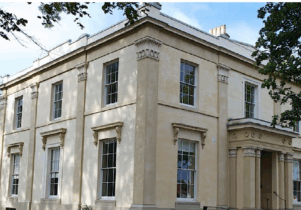
After initially proposing to sink a house into the Albert Dock, Belém settled on a more sensory experience instead – inside The Oratory, a Grade I listed neo-Classical shrine in the old St James Cemetery, once used to house the dead before burial. As the title of the artwork suggests, The Temple of 1,000 Bells features 1,000 blown glass bells that hang from The Oratory’s ceiling, plus a polyphonic sound track accompaniment. The installation is inspired by an ancient legend about a temple with a thousand bells that sank into the ocean and of a young man who sat for days by the sea hoping to catch the sound of the melodious bells again.

Belém first heard the story a few years ago in a meditation centre. ‘I felt very touched by it,’ she says and, ‘later I found a book by Anthony de Mello titled The Song of the Bird, and the legend of the temple was there. When invited by the Liverpool Biennial I started to think about the title and curatorial statement ‘Touched’ and about how I could respond to it. That legend came back to my mind and I decided to rewrite it.’

Belém’s decision to re-write it could be seen as a continuation of a very particular form of Brazilian art. The 1960s Tropicalia Movement set out to confront European colonialism by deliberately devouring European culture and re-working (or regurgitating) it as their own. Having trained in fine art in Brazil before coming to London to complete an MA at Central St Martins, Belém has the luxury of experiencing both, and it has certainly had an impact on her work. ‘I felt that in Brazil we were working more from intuition, and felt that theory had a much stronger presence in London. Access to information, exhibitions and publications is much easier and faster in Europe. Like most Latin American artists, I learned art history mainly through books and reproductions of artworks in books, as we don’t have very good museums. I think seeing the work personally is quite different.’

As a consequence, Belém’s first consideration is how her work will be experienced by other cultures. ‘I’ve just arrived from Japan and they seem to have such a different way of relating to things. When I make an artwork to be exhibited in Japan, I have to make sure that people will understand the message of the work I’m showing, otherwise the piece can become too hermetic, and that’s what I am trying to avoid when I say I hope the work will transcend cultural boundaries.’

What is assured is that Belém’s installation, set inside the little known Oratory (not usually open to the public), will be one of the highlights of the Biennial. The building fell into disrepair in the 1930s after the cemetery was closed, and while Belém’s inspiration may be drawn from distant tales of sunken temples, her installation will awaken a sanctuary that time has forgotten, resting quietly in the heart of the city.

The Temple of a Thousand Bells, The Oratory, St James Cemetery (next to Liverpool Cathedral), Liverpool L1 9DY. Open until 17 Sep (Thurs-Sun, 10am-6pm), then 18 Sep-28 Nov (Mon-Sun 10am-6pm). Free entry. Liverpool Biennial opens 18 Sep (until 28 Nov). Images: courtesy the artist/Liverpool Biennial. Words by Jessica Lack.

Possibly related to this:

  1. Running ahead of the pack. Liverpool Biennial. As the UK’s biggest festival of contemporary art opens in Liverpool, Susie Stubbs talks to Liverpool Biennial’s Artistic Director Lewis...

Filed Under: FeaturedFeatures

Tags:

RSSComments (1)

Leave a Reply | Trackback URL

  1. Merlot says:

    Loved the temple of 1000 bells. What an extraordinary setting too.. The Oratory is fabulous in its own right.

    Also the Biennial volunteer is chatted to was so friendly and helpful
    Well worth a visit..
    Merlot

Leave a Reply

  • Join our club
    Creative Tourist Boutique
  • Your top-to-bottom guide to Manchester
    The Manchester Cultural Calendar 2011
    • Boutique Weekender: February 2012

      Mark the start of spring with this very special, pick n’ mix weekend of art, music, dance and fashion

    • History lesson.

      Visiting Manchester? Want to find out more about what makes Manchester (and Mancunians) tick? Look no further than our potted guide to Manchester past and present. Susie Stubbs and Jonathan Schofield tell all.

    • Curiouser and curiouser.

      Susie Stubbs gets confused and amused at Tate Liverpool’s latest exhibition, Alice in Wonderland

  • Creative Tourist iPhone app
    Creative Tourist iPhone app
  • Manchester hotels
    Book your stay
  • A playful trip around the city
    Manchester Mini Explorer pack
  • Explore Manchester
    The Manchester Weekender 2012
  • Manchester Cultural Calendar
    The Manchester Cultural Calendar 2012
  • Find out more
    Join our mailing list
  • Competitions
    Win stuff now!
  • Goseethis.com
  • Flickr Photostream
    Up, Up, And AwayWhat You Laughing AtWe Love ManchesterAfterHours - BlackLab (03)AfterHours - BlackLab (04)AfterHours - BlackLab (01)