



















"Ghosts": A spectral double bill from the BFI
Adam ScovellThe third event in the BFI’s Grimmfest film screenings explores psychological isolation – at the aptly haunted Ordsall Hall.
The supernatural currently occupies a rather strange place in the popular medium of film. Charles Dickens’s early “ghost in the machine” obsessions, manifested most famously in his short story ‘The Signal-man”, seem to have rubbed off on modern on-screen ghost stories: films such as Paranormal Activity (2007) and television programs like Most Haunted have established the grainy, hand-held camera aesthetic as the norm for presenting the genre. Yet past successes of the supernatural in literature and film show it to be a far more subtle topic than this particular interpretation gives it credit for. And “Ghosts”, the third of Manchester’s BFI Grimmfest gothic screenings, goes some way to prove this.
The choices for Grimmfest’s spectral double bill, shown at Ordsall Hall in Salford – a Tudor hall reputedly haunted by the spectral White Lady – see ghosts used as a narrative tool and as such reveal more than any night-vision, found-footage fare could ever hope to. The first film on the bill, for example, is Jack Clayton’s adaptation of Henry James’ Turn of the Screw, renamed The Innocents (1961). In it, Clayton creates a psychological, clawing drama; The Innocents is one of his finest films.
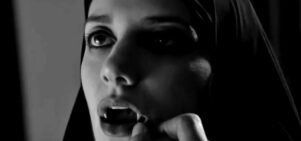
A psychological, clawing drama, The Innocents is one of Jack Clayton’s finest films
The plot is a now familiar one. Governess Miss Giddens (played by Deborah Kerr) is hired by a wealthy bachelor to look after his orphaned niece and nephew, who have a creepy, Village of the Damned-type persona. The film is set in the Victorian era, a time where even a game of hide and seek takes on an otherworldly menace, and is thus ripe for the gothic and the ghostly. But beyond being straightforwardly frightening, The Innocents is a perfect example of how the supernatural can be used to question aspects of everyday life. The power play at work in the strained, ambiguous relationship between Giddens and the young nephew, Miles, is provocative and skilfully portrayed.
The presence of ghosts relies on an overt link between the past and the present, which brings with an implication of inevitable evil or inescapable occurrences. This is explicit in both The Innocents and the second film on the double bill, Alejandro Amenbar’s The Others (2001). Amenbar’s film sits alongside The Woman in Black (2012), as well as a number of ghost stories by Guillermo del Toro, in the ranks of the modern gothic – it has several nice ties to Clayton’s film, too.
In it, Nicole Kidman plays Grace Stewart, the strict mother of two photosensitive children: as the film progresses, she becomes increasingly aware of something odd unfolding in their newly acquired gothic mansion in the Channel Islands. Like Miss Giddens, Grace begins to feel isolated, as if the occurrences playing on her mind are jokes that only she doesn’t understand. The setting, which expresses the psychological seclusion offered by a remote, huge house, is a pastiche on The Innocents; Amenbar almost pays modern homage to Clayton’s film.
The “haunted house”, a sub-genre of horror, is saturated with high quality films (Robert Wise’s The Haunting (1963) and Lewis Allen’s The Uninvited (1944) are just two examples), but the pairing of these two films for the BFI screening series has a natural ease to it. Both have a strong but troubled woman at their core and both have emphatic dalliances with the gothic. And, as you’ll discover if you go along on 13 December, both are completely terrifying.