












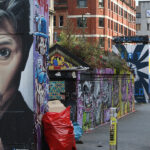

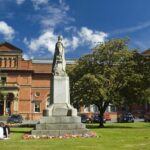

Over and out. Urbis’ final show.

Ben East checks out an exhibition celebrating Urbis’ greatest hits before the shutters come down

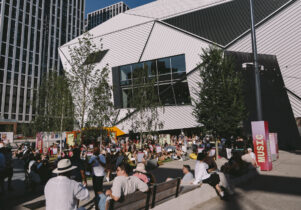
On the first floor, music fans strap on headphones to listen to – and learn about – UK Hip Hop. Two floors up, antique televisions flicker with classic television shows made in ‘Granadaland’. On faces young and old there are expressions of delight, of recognition. Memories are triggered, conversations spark into life. Both galleries are packed. This, you sense, is what a self-styled ‘palace of popular culture’ should be all about. This is Urbis.

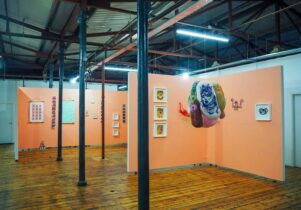
Still, there’s a hushed reverence on the middle floor of this iconic Manchester building. And that’s because the space is filled with a retrospective exhibition: Urbis Has Left The Building: Six Years Of The Best Exhibitions In Pop Culture. On 27 February, Urbis will close its doors in its current form, to reopen as the National Football Museum in 2011. This exhibition isn’t a sad, hollow experience though: it genuinely celebrates some of Urbis’ best shows. The posters, images and artwork are a fine reminder of just how groundbreaking their exhibitions became.

After slightly muddled beginnings back in 2002 as the ‘museum of the modern city’, a rather static look at life in six world cities that dated remarkably quickly (and charged an entrance fee), Urbis Has Left The Building quite rightly focuses on the years since the centre’s ‘reboot’. And since 2004, Urbis has not just held exhibitions covering everything from Punk to gardening, the Haçienda to videogames. It’s absolutely revelled in those myriad cultures and art forms.

The UK Hip Hop exhibition Homegrown typifies this approach. The scene isn’t dealt with in casually broad brush strokes but with incredible attention to detail. So detailed is it, in fact, that as Urbis’ chief executive Vaughan Allen says, it actually provoked discussions about whether this exhibition could be the launch-pad for a genuine archive of UK Hip Hop.

Allen can pinpoint the very moment the centre defined itself. ‘In spring 2008 we had How Manga Took Over The World on the first floor, Urban Gardening on the second floor and Matthew Williamson on the third floor,’ he says. ‘It meant we were dubbed a “Sunday newspaper supplement” experience. But in a way, that was right. There was that idea of turning the page and finding another interesting look at a different part of popular culture.’

And proving that popular culture could work in a gallery setting led to Urbis’ greatest triumph the following autumn. Black Panther: Emory Douglas & The Art Of Revolution looked at how the graphic artwork and slogans of civil rights activist Emory Douglas fuelled the 1960s movement towards black empowerment in America. With its passionate images and stories, and, in a piece of fortuitous timing, the election of a charismatic black American senator to the White House, it deservedly won praise and awards, and didn’t shy away from celebrating the still-controversial Black Panther Party. A mural by Douglas of Obama towers over the current second floor exhibition; a reminder, perhaps, that the story didn’t come to an end with the exhibition, or indeed the election of America’s first black president.

Douglas also held a banner and placard workshop as part of the Reclaim project, another Urbis success story that encourages young people in Manchester to make their voices heard. That, and Urbis’ Best Of Manchester Awards, have enabled creative people such as performance artist Naomi Kashiwagi, fashion designer Nabil El Nayal and art collective Owl Project to make their respective marks on a national and international level.

Of course, it would be wrong to suggest that everything Urbis has attempted to stage has come off. ‘You have to come to a position where you accept, when you take on something like Manga, that there will be millions of people across the world who love it and know more about it than we could,’ says Allen. ‘They will certainly e-mail you, or blog about their concerns,’ he says. ‘But, I suppose, like all popular culture, some things work, some don’t.”

Broadly, though, Urbis has certainly worked. Allen hopes its legacy will be to encourage popular culture exhibitions all over the country, while he remains positive that Urbis’ unique approach to staging exhibitions can be applied to shows about football – that the temporary football shows scheduled to appear alongside the permanent collection of the National Football Museum can be as interesting and innovative as an exhibition, say, on videogames.

That’s for the future. For now, as Allen looks back on the highlights of Urbis, he can be satisfied in a job well done. ‘I have an underlying belief that popular culture changes the world in a way that high culture never does – or certainly hasn’t in the last couple of hundred years,’ he concludes. ‘And we, as a country, are brilliant at popular culture.’ As it prepares to say goodbye, Urbis can genuinely say it’s not only reflected that culture but contributed to it as well.

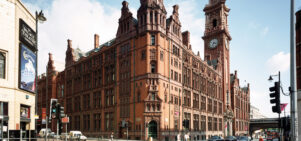
Urbis Has Left The Building: Six Years Of The Best Exhibitions In Pop Culture is on at Urbis until 27 February. Free entry. Images: Emory Douglas exhibition, Susie Stubbs.

Possibly related to this:

  1. Fest in show While the Weekender brings together the best of Manchester over three days, it wouldn't exist without four of the amazing...
  2. The final countdown. Last chance to see Spencer Tunick. This is it: your last chance to see Tunick's exhibition at The Lowry - it closes this Sunday (26 Sept)....

Filed Under: News & Blog

Tags:

RSSComments (0)

Trackback URL

Leave a Reply

  • Find out more
    Join our mailing list
  • Join our club
    Creative Tourist Boutique
  • Creative Tourist iPhone app
    Creative Tourist iPhone app
  • Manchester hotels
    Book your stay