






Dark Horse. Simon Patterson Q&A.
The artist speaks to Jessica Lack about Unrealised Potential at Cornerhouse – and explains why he wants to make the Lisson Gallery disappear


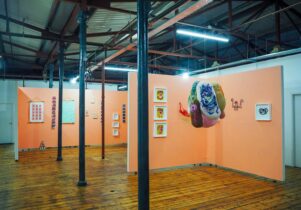
In 2003 Mike Chavez-Dawson invited a group of artists, curators and critics to each put forward an exhibition proposal that could be bought for a nominal fee. Typed onto sheets of A4 paper and unceremoniously tacked up on the gallery walls, these proposals ranged in ambition and size from Richard Wilson’s explosive concept of filling a gallery full of hay bales then crashing a burning barrel of tar into it to David Shrigley’s humble step-by-step instructions for making a paper sculpture. The idea is revisited this month as part of Chavez-Dawson’s group exhibition Unrealised Potential, which similarly explores the creative potential of unexecuted projects.

The beauty of the show lies in the viewer’s imagination and the tantalising possibility that someone might have the courage (and the budget) to realise these ideas. Chavez-Dawson has tapped into one of the most bittersweet aspects of art making; the unrealised artwork. Discarded, forgotten, overlooked or rejected, these proposals remind us that for every work made, there are hundreds left languishing, and that a thought, not yet cast in bronze or committed to canvas, is a fragile thing.

JL: Tell me about the proposal.

SP: The original idea dates from 2002. Simply put, the original work proposed the exchange of equestrian statues throughout the world as a potentially endless project.

JL: What inspired you to come up with the idea?

SP: I use photography the way other artists might use a sketchbook. I collect images, especially when travelling, and they often take the form of taxonomies – which I suppose is obvious given the nature of some of my work. One of these taxonomies was of equestrian statues, which are surprisingly ubiquitous.

The particular genesis of the work was an equestrian statue of Arpad, Chieftain of the Magyars, in Budapest, which I saw when I was participating in a show at the Mucsarnok in 1995 called, ‘Europe: Creation and Recreation’.  The statue reminded me of the last scene in the film El Cid with the ‘dead’ Charlton Heston, strapped to the saddle of his horse, leading his army in final charge against the Moors. I was struck by the fact that such heroic statues, while superficially similar, are actually highly culturally specific.

Coincidentally, Mike Chavez-Dawson approached me in 2002 to contribute a proposal to his show, Potential Hits, which opened at the Chapman Gallery in Salford and later travelled to Unit 2 at Manchester Metropolitan University. If I recall correctly, artists were invited to sell, for a nominal amount, the rights to an unrealised proposal which the purchaser would then own for year, during which time he/she could potentially realise it in whatever way they saw fit. International Heroes was one of my proposals.

The proposal is absolutely serious. Just because it hasn’t been realised yet doesn’t mean that it won’t be. It would have been my proposal for the empty plinth in Trafalgar Square, for example. Alternatively, it would be interesting to swap the equestrian statue of George IV in Trafalgar Square with that of Napoleon Bonaparte in Boulogne-sur-Mer – a literal cultural exchange but probably not one that the British Council would be willing to fund, perhaps.

JL: Some of the statues could be very contentious depending on which country they were sent to. What kind of dialogues were you hoping to generate?

SP: Contentiousness is the whole point of the project. Having said that, I would wager that, initially, nobody would notice the swap, particularly, if the swap took place under cover of darkness or some other subterfuge.

JL:  Is there a particular statue you admire?

SP: The project is not to do with admiration, on the contrary. The point is that the rhetoric of heroism has little to do with actual heroism. It is also to do with the fact that, as I mentioned before, though there are cultural differences, the rhetoric is essentially the same from Moscow to Budapest, London to Rome, Greece to Turkey – not to mention Mongolia, where a 50m high equestrian statue of Genghis Khan was recently unveiled outside Ulan Bator.

JL: The beauty of Unrealised Potential is that an artist is allowed to be as creative as he likes without the worry of health and safety etc… Do you find the bureaucratic constraints put upon you as an artist frustrating?

SP: Artists are used to working with or against constraints. It goes with the territory. Though if you go against constraints you often find yourself, like me, with a portfolio of refused or unrealised projects

JL: Do you find that those constraints can sometimes be energising or beneficial?

SP: Constraints, particularly with art in public spaces however you define them, are only deadly when they become internalised – when they become your default position. Then you become the artist of choice for a certain type of art. There is a career to be made from that type of work, of course. To counter this, it is important to propose work that you are almost certain will be refused, and to be prepared to take the consequences should the proposal actually be accepted. But even then there is no need to despair because, from acceptance to realisation, there are plenty of stages at which the work can still be rejected.

JL: Is there another artwork you have been unable to put into practice because of the problems of insurance or other considerations?

SP: I offered Mike Chavez-Dawson a second choice, which was to make the Lisson Gallery, which represented me at the time, disappear, à la illusionists David Blaine or Siegfried & Roy. This, too, was a genuine proposal which I made to the gallery in 2003, but unaccountably it was refused. It was later published in a book, Home for Lost Ideas, edited by Catherine Griffiths and Dan Rees in 2009.

JL: If you had unlimited freedom, what would you like to make?

SP: Where to begin? To quote Gerhard Merz, ‘freedom is for hairdressers’. But, to answer your question, there are so many proposals of mine that have been rejected, and others that I have never had the opportunity even to propose, that I would find it hard to choose just one. There is one proposal I made for the Millennium Dome that would be equally applicable to the 2012 Olympic site. It involved three mobile cement-mixer lorries making sexual grinding noises…

JL: Apart from your own proposal, are there any of the other Unrealised Potentials you would like to see made?

SP: Given the list of artists in this show, any or all of them. Perhaps I can suggest a swap?

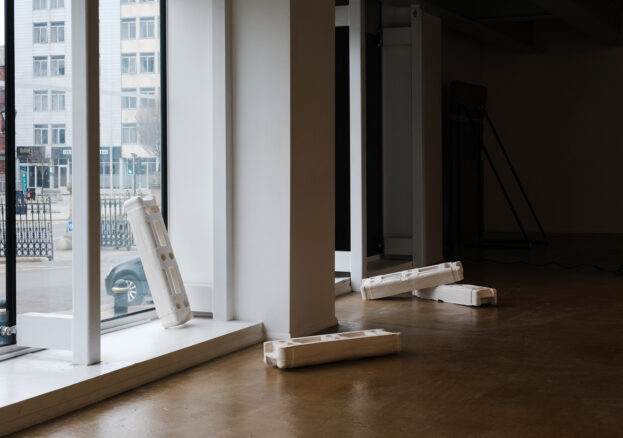
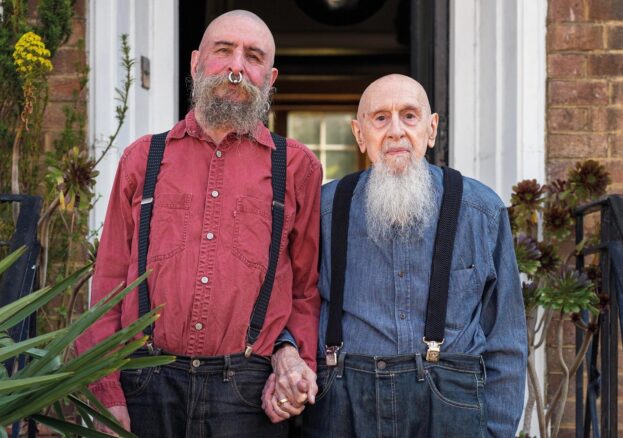
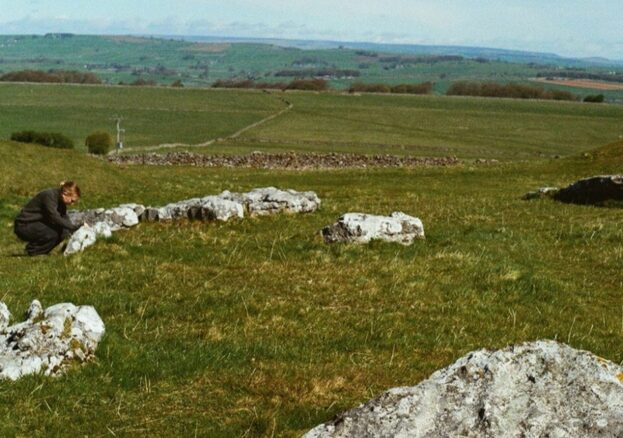
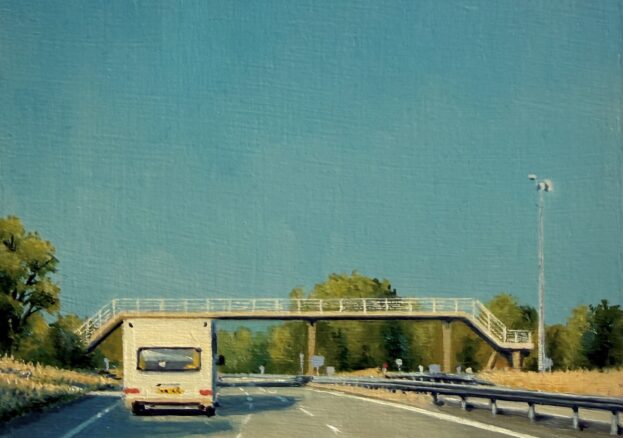
Unrealised Potential is at Cornerhouse until September 12. Free. Jessica Lack is an arts writer for The Guardian, she also writes for various magazines including Dazed and Confused and ID Magazine. Her book Tate Guide to Modern Art Terms, written in collaboration with Simon Wilson, was recently published by Tate Publishing and she is currently working on a book about a composer for Fourth Estate. Images: courtesy Brian Slater. Below: watch our interview with Mike Chavez-Dawson and others, as they talk about their role in the exhibition.


Possibly related to this:

  1. The unrealised interviews. The artists and curator of Cornerhouse's latest group show speak on camera about Unrealised Potential ...
  2. Impractical proposal. Unrealised Potential opens at Cornerhouse. Matt Hull finds a gallery humming with potential ...
  3. No such thing as unrealised potential. At a loose end? Fancy handing over some of your free time to an artist? You’re in the right place:...
  4. Breaking free. Contemporary Art Iraq at Cornerhouse. Daniel Miller on the first show of its kind for a decade...
  5. Violent experiments. The politically explosive contemporary art of Artur Zmijewski...

Filed Under: FeaturedFeatures

Tags:

RSSComments (1)

Leave a Reply | Trackback URL

  1. Sam Evans says:

    Lovely ;-)

Leave a Reply