















Anthony D’Offay: the ultimate gift aid
Mar 15, 2010 | Comments: 0
Jessica Lack talks to the influential art collector about what it’s like to give a multimillion pound collection of art away
For over twenty years, Anthony D’Offay ran one of the most influential art galleries in London, representing many of Britain’s greatest living artists, from Lucian Freud to Rachel Whiteread. In 2001 he caused a sensation in the art world by unexpectedly closing The Anthony D’Offay Gallery in Dering Street. Two years ago his considerable collection of modern and contemporary art was offered to the Nation. It was one of the largest gifts of art ever made – 725 works by some of the world’s leading artists. Since then D’Offay has been curating and installing Artist Rooms, a series of meticulously planned solo exhibitions of artists’ work from his collection shown in public galleries across Britain. Jessica Lack caught up with the ex-art dealer on the eve of the opening of the Ron Mueck Artist Rooms in Manchester.
What have you been up to since closing your gallery in 2001?
I’ve been putting together the collection for Artist Rooms, that is to say I have been working with artists to make sure they were happy with the way we are exhibiting their work and borrowing works from collectors and asking everyone to be generous and kind and helpful.
And have they been?
They have, everyone has been incredibly generous. This would have been impossible without the generosity of the artists.
When you closed the gallery did you already have the idea for the Artist Rooms?
We closed the gallery very suddenly after 21 years because I had a very strong feeling that there was another adventure we could do. It took some time to formulate what that could be. At first we were only working at the National Gallery of Scotland, but that fell through, which was a blessing in disguise because that’s when the idea of having a collection that could travel the country came about. It is so important for people, especially children, to be able to see the art of their own time, and I wanted to bring it to them.
Your art collection plugs quite a few gaps in our national collection
That is absolutely true. There was an aim to enrich the national collection at places like The National Gallery of Scotland or Tate Modern, but to also to have these rooms that could travel and not necessarily have the same composition each time. One of the reasons I’m always travelling is because I’m helping install the rooms according to the wishes of the artist so that the art looks its best and really makes sense.
How did you go about choosing work for your collection?
I have never collected in a “pictures over the sofa” sort of way. I was always collecting with the thought of what would look great in a museum and we always collected in depth. Many museums just buy one example of an artist’s work and then put it in a room with other artists that somehow fit in with it. So you would see a room full of American Pop or English painters from St Ives. We chose the artist then tried to get their signature works, like Damien Hirst’s Away from the Flock, a single sheep in formaldehyde. You are not going to forget it, not tomorrow, not next year.
Has there been any work in particular that was very hard to get?
Lots of them have been incredibly hard to get. We are doing a show of Diane Arbus and to get a self-portrait of hers we have had to wait five years. Having patience and integrity is part of doing this. Walking into a room full of key works by Anslem Kiefer, for example, is so much more powerful than walking into a room full of German paintings from the 1980s and 1990s.
Has the response from the public been good?
According to the Art Fund [one of the agencies who helped secure D'Offay's donation], eight million people came to see the Artist Rooms last year and we have had fantastic gifts to the collection.
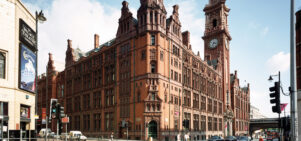
An Artist Room devoted to Ron Mueck opened at the Manchester City Art Gallery a few weeks ago. What is it about Mueck that you admire?
He’s an artist unlike any other. He works extremely hard and probably makes two sculptures a year, and each work is a meditation on the human condition. I think if you look at a sculpture like Spooning Couple (below) it brings out strong emotional feelings in the viewer and the whole question of scale falls away. There is something extremely innocent and childlike about his work. He is from a German family that moved to Australia, and I think there are parallels there with Lucian Freud who also grew up in Germany. They have that historical background off the Northern Renaissance and the New Realism of the 1920s and 1930s.
What are your plans for the future?
We are getting fantastic gifts for the collection all the time. There are two Artist Rooms coming from Martin Creed and I am working hard to put together three or four rooms of photography. It is going to continue I hope for a very long time.
Artist Rooms Ron Mueck runs at Manchester Art Gallery until 11 April. Free entry. Jessica Lack is an arts writer for The Guardian, she also writes for various magazines including Dazed and Confused and ID Magazine. Her book Tate Guide to Modern Art Terms, written in collaboration with Simon Wilson, was recently published by Tate Publishing and she is currently working on a book about a composer for Fourth Estate.
Images (top to bottom): Spooning Couple, 2005, Ron Mueck, © Ron Mueck 2008. Tate and National Galleries of Scotland; Mask III, 2005, Ron Mueck, © Ron Mueck 2008. Tate and National Galleries of Scotland.
Possibly related to this:
- Anthony d’Offay in conversation with Keith Hartley Art collector-turned-philanthropist, Anthony D'Offay talks to the Scottish National Gallery of Modern Art's Keith Hartley about ARTIST ROOMS, the series...
- Larger than life. Ron Mueck at Manchester Art Gallery. Guest blogger Emily Morris is bowled over by the hyper-real sculpture of Ron Mueck, which has just gone on show...
- White collar crime. Office chairs, door wedges, strip lights: Jessica Lack talks to artist Ian Rawlinson about the mundane...
- Sisters of the revolution. Female surrealists on show in the Angels of Anarchy exhibition...
- One for the kids. Dea Birkett makes a plea for more art, less finger painting...