







Liverpool Biennial 2012 reviewed: Susie Stubbs finds a contemporary art festival that is confusing, difficult but ultimately of our time
I started my love affair with Liverpool Biennial in 1999. I was working at Tate Liverpool; there was a party in the then rarely-opened St. George’s Hall. There may also have been breakdancing at Jarvis Cocker’s feet. (It was my friend, Ian, not me, and to his credit, Jarvis had the good grace to look the other way.)
But it wasn’t the party that got to me; it was the art. “What kind of relationship can art have with the real?” asked curator, Anthony Bond at the time. Early on, Bond’s Biennial conundrum was answered by the sensual – such as by Ernesto Neto’s clove and cumin-filled stockings that hung from a gallery roof like fragrant stalactites. Other times, it felt that an arts piñata had burst over the city, showering its artistic contents almost everywhere. Later still, it was the spectacle: Ai Weiwei’s giant spider web one year; Richard Wilson’s Turning the Place Over another, a neat hole punched into an abandoned office block. Here was art that grew directly from the city that hosted it; an artistic bloom that solidified into Liverpool’s moment in the cultural sun in 2008. The relationship wasn’t so much between art and the real as between art and the city. And not just any city, either.
“Here was art that grew directly from the city that hosted it; an artistic bloom that solidified into Liverpool’s moment in the cultural sun in 2008.”
So on first glance, this year’s Biennial is no different, the usual ingredients all present and correct: here are hundreds of artists showing in dozens of venues. There is the photo-ready public art, over there are unusual buildings overrun with the stuff and, oh look, there’s Guardian critic, Adrian Searle, as grudging as ever.
Yet the 2012 Biennial feels utterly changed. It feels less exuberant, less evident, somehow, on the streets of the city. The narrative thread that winds between the 60 artists whose work forms part of the central, multi-venue exhibition, The Unexpected Guest often falls head-scratchingly slack. At FACT, for example, Pedro Reyes‘ old school board games sit by an affecting film about Arab identity by Akram Zaatari, both close to Jemima Wyman’s dreamcatcher-like sculpture, which crawls up the staircase as methodically as a hippy on a microdot. As good as they are, when taken as a group, they make no thematic sense at all.
It is sprawling and confusing and hard to get a handle on – and yet this year’s Biennial somehow works, and where it works best is in its choice of buildings, notably the Cunard Building, sitting proudly on the waterfront in all its Grade II-listed glory, and, just by Lime Street Station, Copperas Hill, an ugly chunk of 70s industrial architecture that’s a former Royal Mail sorting office. Inside these two spaces, art and architecture meet; the point at which they do so supplying this year’s answer to the question that Anthony Bond posed back in 1999.
When the Biennial was first conceived it was in the midst of what one of its directors called “the city’s urban renaissance”. While things weren’t exactly peachy back then, there was at least a sense of progression. Somewhere, out there, lay a brighter future. Now, as we bounce up and then further down the global economic scale, and our politicians create a “them-and-us” disunion even Thatcher may have baulked at, this notion of urban renaissance feels little more than a half-remembered dream.
“We talk of the highly skilled and the need for global competitiveness, and indeed Copperas Hill has been bought by a university. Yet its future tenants face a future as uncertain as its past lot.”
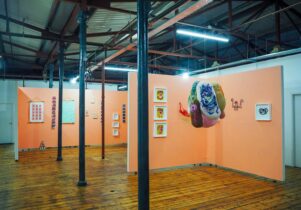
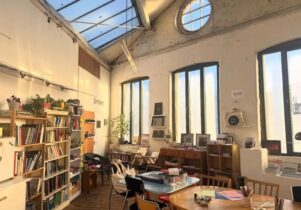
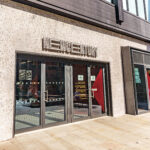
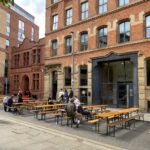
Copperas Hill says it all about this shaky new world. It is a “post post-industrial” warehouse, closed in 2010 when the Royal Mail found a cheaper option in Warrington. The signs of its former use (A4 notices taped hastily to doors, rows of stamps pasted onto walls) are a reminder that art here fills a void. It is a hulking, postal relic of a bygone era; the siting here of both City States, an exhibition dedicated to the role that “the city” plays in both our own and our national identities, and art school showcase New Contemporaries is a stroke of genius. This city – like every other – is foundering. A future built on retail and service suddenly looks less clever with a decimated public sector and a private one so far incapable of stepping into the breach. So we pin our hopes on education. We talk of the highly skilled and the need for global competitiveness, and indeed Copperas Hill has been bought by a university. Yet the future tenants of Copperas Hill face a future as uncertain as its past lot.
The 1916 Cunard Building is a different beast, its interior once a class-segregated waiting room for the emigrants who left Liverpool via Cunard’s trans-Atlantic steamers. Identity and migration and nationalism pull tightly across its grand Portland Stone frontage; even its classical façade screams stiff upper lip, chaps. Today, it is a glorified office block, an entire floor empty as the recession nips at its River Mersey-cooled heels.
People may wander in just for a gander at its Doric columns but instead of nostalgia they’ll find Pamela Rosenkranz’s Bow Human, a circle of life-size figures kneeling in a circle on the floor, their features obscured by foil blankets, their reason for kneeling uncertain, or Superflex’s myriad ‘to let’ signs hanging overhead, like bunting left to rot long after the street party was over. In a darkened room, they’ll find Nadia Kaabi-Linke’s Parkverbot, a humble park bench turned lethal courtesy of a covering of steel spikes, close by her film, NO, where a church full of immigrants make their case to a faceless British border control. Identity, globalisation, welcome and hostility all jostle for attention inside this old dame of a building, the perfect riposte to her grand attire.
If these two buildings are architectural signs of the times, then the art within is too. At each, you go in not knowing what to expect and come away with no answers whatsoever. But that’s precisely the point. What better way for art to prove its relevance than by asking where we think we’re going and who exactly, if our politicians are incapable, is going to get us there? Liverpool Biennial: you might be more difficult this time round but I’m still enamoured of you. Even if there was no breakdancing at Jarvis’ feet this time round.
Liverpool Biennial 2012, until 25 November 2012, free. See our in-pictures review of the festival, read our preview or find out what we thought of The Medium is the Medium.
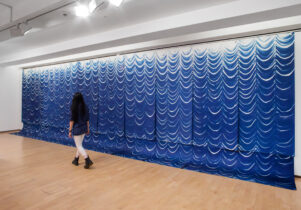
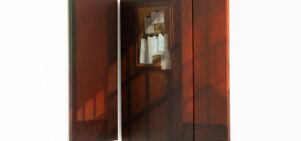
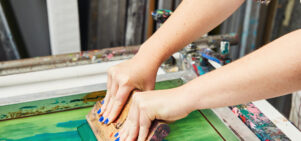
Images (top to bottom): Copperas Hill building (New Contemporaries); interior of Copperas Hill (stamps); Susie Stubbs/Simon Turner for Creative Tourist.


Be the first to know about the latest events